A Doctor

A Doctor

Sam is a doctor. He takes care of sick people. He smiles at his patients. He gives them medicine. He gives stickers to younger patients. The younger patients like him. They visit him when they are sick. He helps them feel better. This makes him happy. He loves his job. He goes home feeling proud.

A Doctor
/ə ˈdɑktər/

Sam is a doctor.
/sæm ɪz ə ˈdɑktər/
He takes care of sick people.
/hi teɪks kɛr əv sɪk ˈpipəl/
He smiles at his patients.
/hi smaɪlz ət hɪz ˈpeɪʃənts/
He gives them medicine.
/hi ɡɪvz ðəm ˈmɛdəsən/
He gives stickers to younger patients.
/hi ɡɪvz ˈstɪkərz tə ˈyʌŋɡər ˈpeɪʃənts/
The younger patients like him.
/ðə ˈyʌŋɡər ˈpeɪʃənts laɪk ɪm/
They visit him when they are sick.
/ðeɪ ˈvɪzət ɪm wɛn ðeɪ ər sɪk/
He helps them feel better.
/hi hɛlps ðəm fil ˈbɛtər/
This makes him happy.
/ðɪs meɪks ɪm ˈhæpi/
He loves his job.
/hi lʌvz hɪz dʒɑb/
He goes home feeling proud.
/hi ɡoʊz hoʊm ˈfilɪŋ praʊd/

A Doctor
一名医生

Sam is a doctor.
山姆是一名医生。
He takes care of sick people.
他照顾生病的人。
He smiles at his patients.
他对病人微笑。
He gives them medicine.
他给他们药。
He gives stickers to younger patients.
他给年纪小的病人贴纸。
The younger patients like him.
年纪小的病人都很喜欢他。
They visit him when they are sick.
他们生病时会来看他。
He helps them feel better.
他让他们感觉好一些。
This makes him happy.
这让他很开心。
He loves his job.
他热爱自己的工作。
He goes home feeling proud.
他带着自豪的心情回家。

1. What does Sam give to sick people?
(山姆给生病的人什么?)

2. Who likes Sam very much?
(谁很喜欢山姆?)

3. How does Sam feel when he goes home?
(山姆回家时感觉怎么样?)

参考答案:

答案 1

He gives medicine to sick people. (他给生病的人药。)

答案 2

The younger patients like Sam very much. (年纪小的病人很喜欢山姆。)

答案 3

He feels proud when he goes home. (山姆回家时感到很自豪。)
Babysitting

Babysitting

Casey wants a new car. She needs some money. She decides to babysit. She takes care of a child. She feeds him lunch. She reads him a funny story. The child laughs.
Casey likes him. Soon the child’s mom comes home. The child gives Casey a kiss. Casey leaves. She will babysit him again.

Babysitting
/ˈbeɪbiˌsɪtɪŋ/

Casey wants a new car.
/ˈkeɪsi wɑnts ə nu kɑr/
She needs some money.
/ʃi nidz səm ˈmʌni/
She decides to babysit.
/ʃi dɪˈsaɪdz tə ˈbeɪbiˌsɪt/
She takes care of a child.
/ʃi teɪks kɛr əv ə tʃaɪld/
She feeds him lunch.
/ʃi fidz ɪm lʌntʃ/
She reads him a funny story.
/ʃi ridz ɪm ə ˈfʌni ˈstɔri/
The child laughs.
/ðə tʃaɪld læfs/
Casey likes him.
/ˈkeɪsi laɪks ɪm/
Soon the child’s mom comes home.
/sun ðə tʃaɪldz mɑm kʌmz hoʊm/
The child gives Casey a kiss.
/ðə tʃaɪld ɡɪvz ˈkeɪsi ə kɪs/
Casey leaves.
/ˈkeɪsi livz/
She will babysit him again.
/ʃi wɪl ˈbeɪbiˌsɪt ɪm əˈɡɛn/

Babysitting
照看小孩

Casey wants a new car.
凯西想要一辆新车。
She needs some money.
她需要一些钱。
She decides to babysit.
她决定去做 babysitting。
She takes care of a child.
她照看一个小孩。
She feeds him lunch.
她喂他吃午饭。
She reads him a funny story.
她给他读了一个有趣的故事。
The child laughs.
那个小孩笑了。
Casey likes him.
凯西很喜欢他。
Soon the child’s mom comes home.
很快,那个小孩的妈妈回家了。
The child gives Casey a kiss.
那个小孩亲了凯西一下。
Casey leaves.
凯西离开了。
She will babysit him again.
她还会再来照看他。

1. Why does Casey decide to babysit?
(为什么凯西决定去照看小孩?)

2. What does Casey read to the child?
(凯西给那个小孩读了什么?)

3. What does the child do before Casey leaves?
(凯西离开之前,那个小孩做了什么?)

参考答案:

答案 1

She decides to babysit because she needs some money. (她决定去照看小孩,因为她需要一些钱。)

答案 2

She reads a funny story to the child. (她给那个小孩读了一个有趣的故事。)

答案 3

The child gives Casey a kiss before she leaves. (在凯西离开之前,那个小孩亲了她一下。)

Water on the Floor

Water on the Floor

She is thirsty. She gets a glass of water. She begins to walk away. She drops the glass. Water spills on the floor. There is a big puddle. She gets a mop. She wipes the water off the floor. The floor is clean again. She gets another glass of water. She drinks it. She is happy.

Water on the Floor
/ˈwɔtər ɑn ðə flɔr/

She is thirsty.
/ʃi ɪz ˈθərsti/
She gets a glass of water.
/ʃi ɡɛts ə ɡlæs əv ˈwɔtər/
She begins to walk away.
/ʃi bɪˈɡɪnz tə wɔk əˈweɪ/
She drops the glass.
/ʃi drɑps ðə ɡlæs/
Water spills on the floor.
/ˈwɔtər spɪlz ɑn ðə flɔr/
There is a big puddle.
/ðɛr ɪz ə bɪɡ ˈpʌdəl/
She gets a mop.
/ʃi ɡɛts ə mɑp/
She wipes the water off the floor.
/ʃi waɪps ðə ˈwɔtər ɔf ðə flɔr/
The floor is clean again.
/ðə flɔr ɪz klin əˈɡɛn/
She gets another glass of water.
/ʃi ɡɛts əˈnʌðər ɡlæs əv ˈwɔtər/
She drinks it.
/ʃi drɪŋks ɪt/
She is happy.
/ʃi ɪz ˈhæpi/

Water on the Floor
地板上的水

She is thirsty.
她口渴了。
She gets a glass of water.
她拿了一杯水。
She begins to walk away.
她开始往前走。
She drops the glass.
她把杯子掉在了地上。
Water spills on the floor.
水洒在了地板上。
There is a big puddle.
地上有一大摊水。
She gets a mop.
她拿来一把拖把。
She wipes the water off the floor.
她把地板上的水擦掉。
The floor is clean again.
地板又干净了。
She gets another glass of water.
她又拿了一杯水。
She drinks it.
她把水喝了。
She is happy.
她很高兴。

1. What does she get first?
(她先拿了什么?)

2. What does she use to clean the floor?
(她用什么清理地板?)

3. How does she feel at the end?
(最后她感觉怎么样?)

参考答案:

答案 1

She gets a glass of water first. (她先拿了一杯水。)

答案 2

She uses a mop to clean the floor. (她用拖把清理地板。)

答案 3

She feels happy at the end. (最后她感到很高兴。)

First Day of School

First Day of School

He walks into the classroom. There is an empty seat in front of him. He sits down. He looks around the room. There are many other boys and girls. He says hi to the girl next to him. She smiles back. The teacher comes in. She closes the door. Everyone becomes quiet. The first day of school begins.

First Day of School
/fɜrst deɪ əv skul/

He walks into the classroom.
/hi wɔks ˈɪntu ðə ˈklæsˌrum/
There is an empty seat in front of him.
/ðɛr ɪz ən ˈɛmpti sit ɪn frʌnt əv hɪm/
He sits down.
/hi sɪts daʊn/
He looks around the room.
/hi lʊks əˈraʊnd ðə rum/
There are many other boys and girls.
/ðɛr ər ˈmɛni ˈʌðər bɔɪz ən ɡɜrlz/
He says hi to the girl next to him.
/hi sɛz haɪ tə ðə ɡɜrl nɛkst tə hɪm/
She smiles back.
/ʃi smaɪlz bæk/
The teacher comes in.
/ðə ˈtitʃər kʌmz ɪn/
She closes the door.
/ʃi ˈkloʊzɪz ðə dɔr/
Everyone becomes quiet.
/ˈɛvriˌwʌn bɪˈkʌmz ˈkwaɪət/
The first day of school begins.
/ðə fɜrst deɪ əv skul bɪˈɡɪnz/

First Day of School
开学第一天

He walks into the classroom.
他走进教室。
There is an empty seat in front of him.
他前面有一个空座位。
He sits down.
他坐了下来。
He looks around the room.
他环顾教室。
There are many other boys and girls.
还有很多其他的男孩和女孩。
He says hi to the girl next to him.
他跟旁边的女孩打了声招呼。
She smiles back.
她也微笑着回应了他。
The teacher comes in.
老师走了进来。
She closes the door.
她把门关上了。
Everyone becomes quiet.
大家都安静了下来。
The first day of school begins.
开学第一天开始了。

1. Where does he sit?
(他坐在哪里?)

2. Who does he say hi to?
(他跟谁打招呼?)

3. What does the teacher do?
(老师做了什么?)

参考答案:

答案 1

He sits in an empty seat in front of him. (他坐在他前面的一个空座位上。)

答案 2

He says hi to the girl next to him. (他跟坐在他旁边的女孩打招呼。)

答案 3

The teacher comes in and closes the door. (老师走进来并关上了门。)

Morning

Morning

He wakes up early. He sees the sun rising. He brushes his teeth. His teeth are clean and white. He puts on his clothes. His shirt is blue. His shoes are yellow. His pants are brown. He walks downstairs. He gets a bowl from the kitchen. He pours cereal and milk into the bowl. He eats his breakfast. He gets the newspaper. He sits down and reads.

Morning
/ˈmɔrnɪŋ/

He wakes up early.
/hi weɪks ʌp ˈərli/
He sees the sun rising.
/hi siz ðə sʌn ˈraɪzɪŋ/
He brushes his teeth.
/hi ˈbrʌʃɪz hɪz tiθ/
His teeth are clean and white.
/hɪz tiθ ər klin ən waɪt/
He puts on his clothes.
/hi pʊts ɑn hɪz kloʊðz/
His shirt is blue.
/hɪz ʃərt ɪz blu/
His shoes are yellow.
/hɪz ʃuz ər ˈyɛloʊ/
His pants are brown.
/hɪz pænts ər braʊn/
He walks downstairs.
/hi wɔks ˌdaʊnˈstɛrz/
He gets a bowl from the kitchen.
/hi ɡɛts ə boʊl frəm ðə ˈkɪtʃən/
He pours cereal and milk into the bowl.
/hi pɔrz ˈsɪriəl ən mɪlk ˈɪntu ðə boʊl/
He eats his breakfast.
/hi its hɪz ˈbrɛkfəst/
He gets the newspaper.
/hi ɡɛts ðə ˈnuzˌpeɪpər/
He sits down and reads.
/hi sɪts daʊn ən ridz/

Morning
早晨
He wakes up early.
他很早就醒来了。
He sees the sun rising.
他看见太阳正在升起。
He brushes his teeth.
他刷牙。
His teeth are clean and white.
他的牙齿又干净又白。
He puts on his clothes.
他穿上衣服。
His shirt is blue.
他的衬衫是蓝色的。
His shoes are yellow.
他的鞋子是黄色的。
His pants are brown.
他的裤子是棕色的。
He walks downstairs.
他走下楼。
He gets a bowl from the kitchen.
他从厨房里拿了一个碗。
He pours cereal and milk into the bowl.
他把麦片和牛奶倒进碗里。
He eats his breakfast.
他吃早餐。
He gets the newspaper.
他拿了报纸。
He sits down and reads.
他坐下来读报。

1. What color is his shirt?
(他的衬衫是什么颜色的?)

2. What does he pour into the bowl?
(他往碗里倒了什么?)

3. What does he read?
(他读什么?)

参考答案:

答案 1

His shirt is blue. (他的衬衫是蓝色的。)

答案 2

He pours cereal and milk into the bowl. (他往碗里倒了麦片和牛奶。)

答案 3

He reads the newspaper. (他读报纸。)

 Working at the Library

Working at the Library

Alan works at the library. He is a librarian. His job is to help people check out books. He also helps them find books. He loves working with people. His favorite part of the job is talking to people about books. Every week he holds a book club. He also helps shelve and organize the books.

Alan’s favorite types of books are fantasy books. He loves sharing his views on books with others. The library is like his second home. He hopes that people enjoy their time there as much as he does. Books are his escape from his problems. The library is open to everyone. He likes working with all types of people.

Working at the Library
在图书馆工作


Alan works at the library.
Alan 在图书馆工作。
He is a librarian.
他是一名图书管理员。
His job is to help people check out books.
他的工作是帮助人们借书。
He also helps them find books.
他也会帮助他们找到想要的书。
He loves working with people.
他很喜欢与人打交道。
His favorite part of the job is talking to people about books.
他最喜欢的工作内容是和人们聊书。
Every week he holds a book club.
每周他都会举办一次读书会。
He also helps shelve and organize the books.
他还会帮忙把书放回书架并整理书籍。
Alan’s favorite types of books are fantasy books.
Alan 最喜欢的书是奇幻类书籍。
He loves sharing his views on books with others.
他很喜欢和别人分享自己对书的看法。
The library is like his second home.
图书馆就像他的第二个家。
He hopes that people enjoy their time there as much as he does.
他希望人们在那里也能像他一样享受阅读时光。
Books are his escape from his problems.
书籍是他逃离烦恼的方式。
The library is open to everyone.
图书馆对所有人开放。
He likes working with all types of people.
他喜欢和各种各样的人一起工作。

1. Why does Alan enjoy his job?
(Alan 为什么喜欢他的工作?)

2. Why does Alan like the library so much?
(Alan 为什么这么喜欢图书馆?)

3. What does Alan do besides helping people check out books?
(除了帮助人们借书,Alan 还做什么?)

参考答案:

答案 1

Alan enjoys his job because he likes helping people and talking to them about books. (Alan喜欢他的工作,因为他喜欢帮助别人,也喜欢和他们谈论书。)

答案 2

Alan likes the library so much because he loves books and feels comfortable there. (Alan这么喜欢图书馆,因为他喜欢书,而且在那里感到很自在。)

答案 3

Besides helping people check out books, Alan helps people find books, holds a book club, and organizes the books. (除了帮助人们借书,他会帮助人们找书、举办读书会,还会整理书籍。)

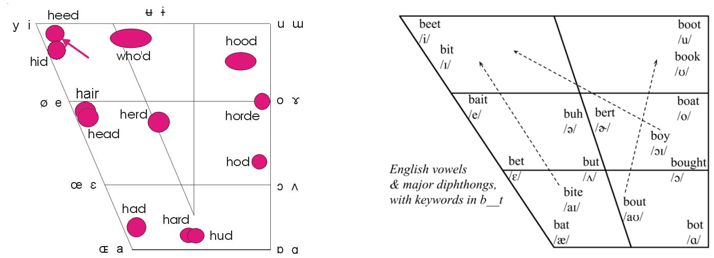
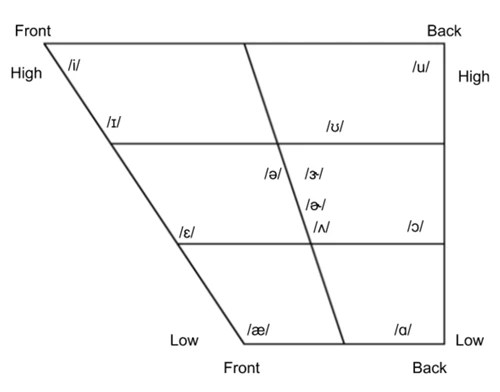
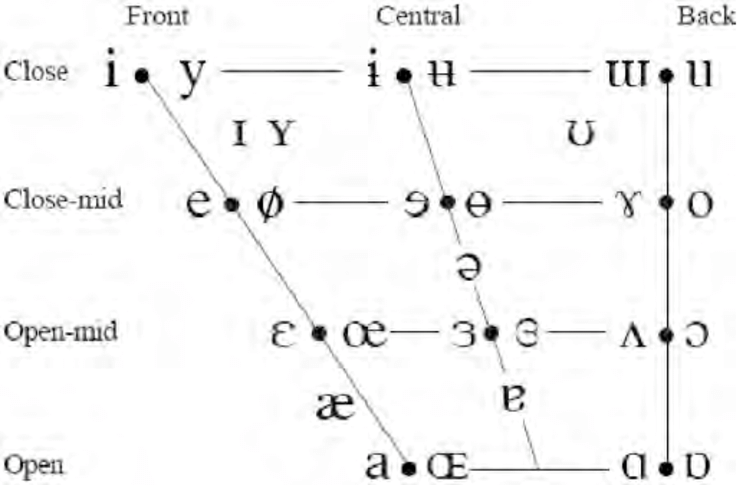
美式英语元音发音位置图(Vowel Trapezium)

**Vowel trapezium(元音梯形图)**表示的是:

  • 横向 → 舌头前后位置(Front / Central / Back)
  • 纵向 → 舌头高低位置(Close / Mid / Open)

可以这样理解:

1️⃣ 前元音(Front vowels)

舌头在口腔前部,嘴角通常更展开

  • /i/ (see)
  • /ɪ/ (sit)
  • /e/ 或 /eɪ/(say)
  • /ɛ/ (bed)
  • /æ/ (cat)

2️⃣ 中元音(Central vowels)

舌头在口腔中间位置

  • /ʌ/ (cup)
  • /ə/ (about 的 a)
  • /ɝ/ /ɚ/ (bird / teacher,美式 r-colored)

3️⃣ 后元音(Back vowels)

舌头在口腔后部,嘴唇通常更圆

  • /u/ (food)
  • /ʊ/ (book)
  • /oʊ/ (go)
  • /ɔ/ (thought)
  • /ɑ/ (father)

4️⃣ 读图的关键

  • 越上面 → 舌头越高(Close vowel)
  • 越下面 → 舌头越低(Open vowel)
  • 越左边 → 舌头越靠前(Front vowel)
  • 越右边 → 舌头越靠后(Back vowel)

例如:

  • /i/ → 前 + 高
  • /æ/ → 前 + 低
  • /u/ → 后 + 高
  • /ɑ/ → 后 + 低

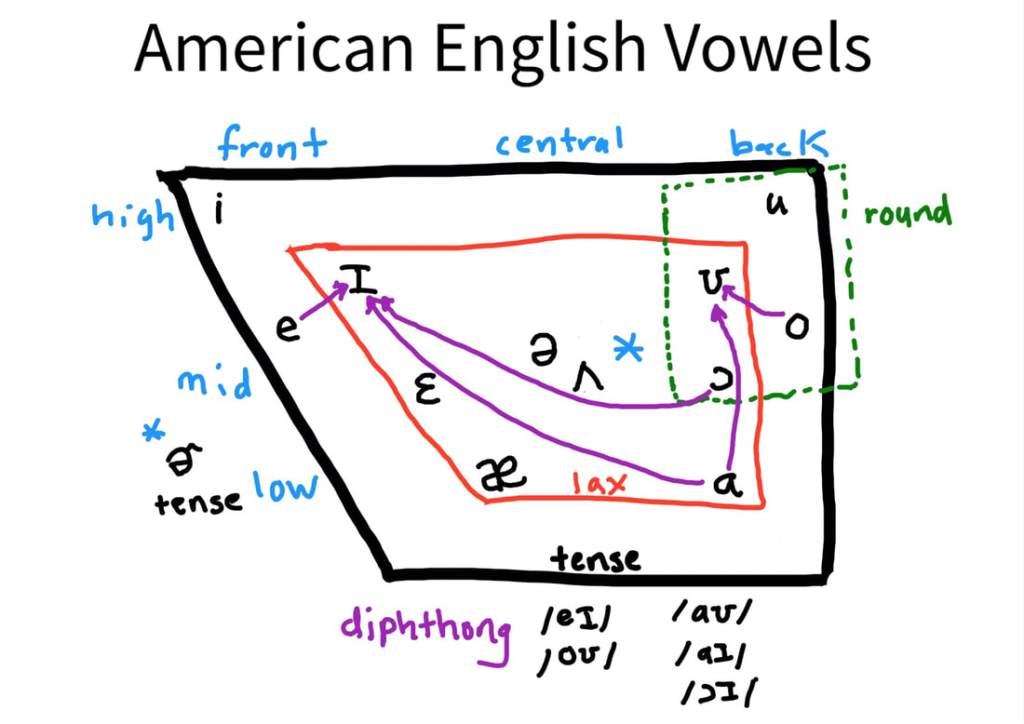
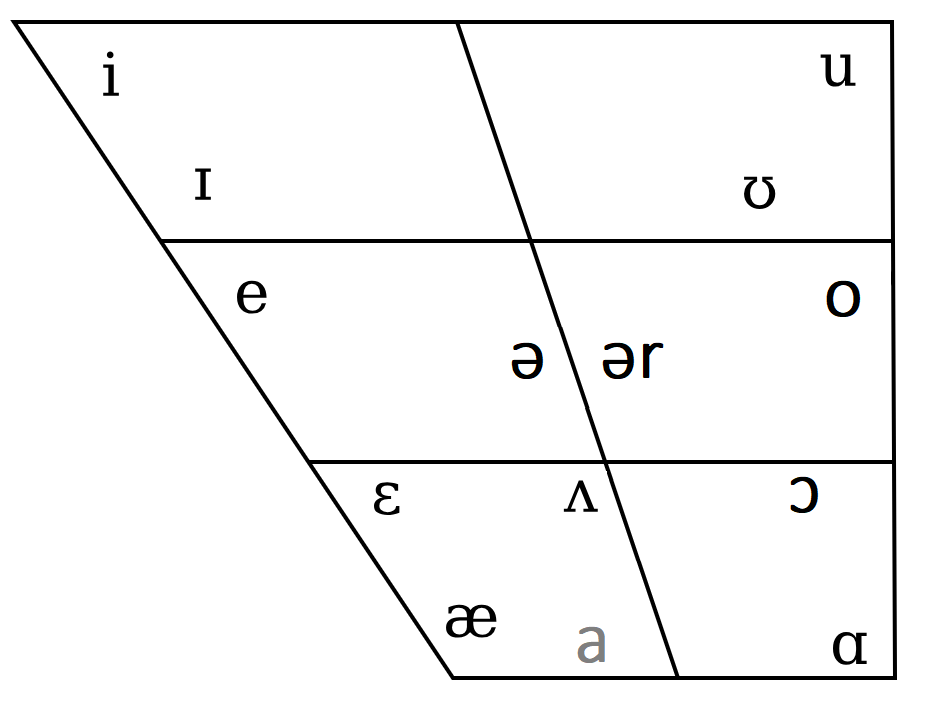
美式英语完整元音梯形图(Vowel Trapezium – General American)

下面给你解释如何读这张语言学标准图(很多语音学教材用的就是这个):


1 舌头高度(上下)

图的 纵轴 = 舌头高度

从上到下:

  • Close / High(高元音)
    /i/ /ɪ/ /u/ /ʊ/
  • Mid(中元音)
    /e/ /ɛ/ /ə/ /ʌ/ /o/
  • Open / Low(低元音)
    /æ/ /ɑ/ /ɔ/

口诀可以记:

高元音 → 嘴小
低元音 → 嘴大

例如:

/i/ → 嘴最小
/æ/ → 嘴很大


2 舌头前后(左右)

图的 横轴 = 舌头前后

从左到右:

前元音 Front

舌头靠前

/i/
/ɪ/
/e/
/ɛ/
/æ/

例:

see
sit
bed
cat


中元音 Central

/ə/
/ʌ/
/ɝ/

例:

about
cup
bird


后元音 Back

/u/
/ʊ/
/o/
/ɔ/
/ɑ/

例:

food
book
go
thought
father


3 美式英语最重要的一类:R-colored vowels

美式英语有 卷舌元音

/ɝ/
/ɚ/

例:

bird
teacher
worker

很多教材也写成:

/ər/


4 双元音的位置(movement)

双元音不是固定点,而是滑动路径

例如:

/aɪ/
起点:/a/
终点:/ɪ/

/aʊ/
起点:/a/
终点:/ʊ/

/ɔɪ/
起点:/ɔ/
终点:/ɪ/


5 最重要的美式元音位置(必须掌握)

元音位置
/i/前 高
/ɪ/前 高
/e/前 中
/ɛ/前 中
/æ/前 低
/ə/中 中
/ʌ/中 中
/u/后 高
/ʊ/后 高
/o/后 中
/ɔ/后 低
/ɑ/后 低

6 一个非常重要的美式发音特点

很多美国口音:

cot = caught

/ɑ/ 和 /ɔ/ 合并

所以:

cot
caught

发音一样。


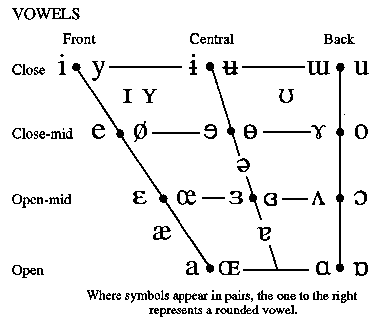
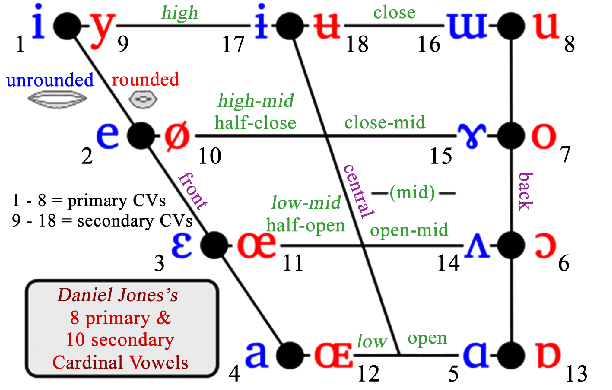
Daniel Jones 标准元音图(Cardinal Vowel Chart)

这张图是世界语音学的标准参考图
几乎所有语言的元音系统(包括英语)都是从这张图映射出来的

我给你用最清晰的方式讲解。


1 这张图表示什么

它表示 舌头在口腔里的位置

两个维度:

纵向(上下)= 舌头高度

高 → Close vowel
低 → Open vowel

横向(左右)= 舌头前后

左 → Front vowel
右 → Back vowel

所以:

左上角 = 舌头前 + 高

右下角 = 舌头后 + 低


2 八个 Cardinal Vowels(基准元音)

语言学用 8 个基准元音作为参照:

编号IPA示例感觉
1/i/非常高前元音
2/e/前中元音
3/ɛ/前开元音
4/a/最开前元音
5/ɑ/最开后元音
6/ɔ/后开元音
7/o/后中元音
8/u/高后元音

这 8 个元音构成梯形边界。


3 为什么是“梯形”

人的口腔结构:

前面空间大
后面空间小

所以元音图不是矩形,而是 trapezium(梯形)


4 英语元音如何放进这张图

英语的元音其实就是落在这些位置附近。

例如:

英语元音位置
/i/ (see)Cardinal 1 附近
/ɪ/ (sit)在 /i/ 下方
/æ/ (cat)在 /a/ 附近
/ɑ/ (father)Cardinal 5
/u/ (food)Cardinal 8

5 你必须理解的核心规律

元音 = 舌头位置

公式:

舌头高度 + 舌头前后 + 嘴唇形状

例如:

/i/
舌头高 + 前 + 嘴角展开

/u/
舌头高 + 后 + 嘴唇圆

/æ/
舌头低 + 前 + 嘴巴大开


6 为什么学这个很重要

一旦你理解这张图:

你可以立刻知道:

为什么

ship ≠ sheep
full ≠ fool
bed ≠ bad
cot ≠ caught

因为它们在图上的位置不同


如果你愿意,我可以给你一张 专门针对英语学习者的“终极元音地图”(非常直观的一张图),把:

  • 20 个英语元音
  • 舌头位置
  • 嘴形
  • 典型单词

全部画在同一张图上

那张图是很多英语语音老师最喜欢用的一张。

I drink coffee.

喝咖啡drink coffee/drɪŋk ˈkɔfi/
开车去上班drive to work/draɪv tə wərk/
早起get up early/ɡɛt ʌp ˈərli/
听音乐listen to music/ˈlɪsən tə ˈmyuzɪk/
打篮球play basketball/pleɪ ˈbæskətˌbɔl/
看书read books/rid bʊks/
学英语study English/ˈstʌdi ˈɪŋɡlɪʃ/
坐公交车take the bus/teɪk ðə bʌs/

I do something.
= 你(平时/经常)做某事。
这是一般现在时:在一段时间里(过去到现在、并且以后通常也会继续)反复做或发生的事——也就是习惯/规律。
I watch TV.
= 我(平时/经常)看电视。(我有这个习惯)


例句:
I drink coffee.
我喝咖啡。
(= 我平时/经常喝咖啡。有喝咖啡的习惯)

★ 想象中文句子的情景或语境,然后直接用英语表达,如例句a和b。

1. 我喝咖啡。→ I drink coffee.
2. 我听音乐。→
3. 我坐公交车。→
4. 我开车去上班。→
5. 我学英语。→
6. 我早起。→
7. 我打篮球。→
8. 我看书。→

1. 我喝咖啡。→ I drink coffee.
2. 我听音乐。→ I listen to music.
3. 我坐公交车。→ I take the bus.
4. 我开车去上班。→ I drive to work.
5. 我学英语。→ I study English.
6. 我早起。→ I get up early.
7. 我打篮球。→ I play basketball.
8. 我看书。→ I read books.

study learn
study = “学/学习(过程)”:强调用时间和方法去学(读书、上课、复习、做题)
learn = “学会/学到(结果)”:强调获得知识/技能,常带“学会了”的结果感。
I study English.
我学英语。(强调日常学习/上课/复习的过程)
I learn English
我学英语。(强调“在学习、在掌握”)
study = 学习这件事(过程)
learn = 学到东西/学会了(结果)

Do you drink coffee?

做家务do the housework/du ðə ˈhaʊsˌwərk/
喝咖啡drink coffee/drɪŋk ˈkɔfi/
开车drive/draɪv/
吃米饭eat rice/it raɪs/
点外卖order food delivery/ˈɔrdər fud dəˈlɪvəri/
打网球play tennis/pleɪ ˈtɛnɪs/
洗碗wash the dishes/wɑʃ ðə ˈdɪʃɪz/
看电视watch TV/wɑtʃ ˌtiˈvi/

Do you do something?
= 你(平时/经常)做什么吗?
这是一般现在时:在一段时间里(过去到现在、并且以后通常也会继续)反复做或发生的事——也就是习惯/规律。
Do you play basketball? = 你(平时/经常)打篮球吗?(你有没有这个习惯)


例句:
Do you drink coffee?
你喝咖啡吗?
(= 你平时/经常喝咖啡吗?有喝咖啡的习惯吗?)

★ 想象中文句子的情景或语境,然后直接用英语表达,如例句a和b。

1. 你喝咖啡吗?→ Do you drink coffee?
2. 你做家务吗?→
3. 你打网球吗?→
4. 你会开车吗?→
5. 你看电视吗?→
6. 你吃米饭吗?→
7. 你点外卖吗?→
8. 你洗碗吗?→

1. 你喝咖啡吗?→ Do you drink coffee?
2. 你做家务吗?→ Do you do the housework?
3. 你打网球吗?→ Do you play tennis?
4. 你会开车吗?→ Do you drive?
5. 你看电视吗?→ Do you watch TV?
6. 你吃米饭吗?→ Do you eat rice?
7. 你点外卖吗?→ Do you order food delivery?
8. 你洗碗吗?→ Do you wash the dishes?

Do you drink coffee?
关于 Do you 的发音:
清晰(慢速、课堂/强调):
Do you…? → /du yu/
常见自然语速(you 弱读):
Do you…? → /du yə/
最口语:
Do you…? → /də yə/