双元音 aɪ

单音节单词

I /aɪ/ 我
my /maɪ/ 我的
cry /kraɪ/ 哭
fly /flaɪ/ 飞
buy /baɪ/ 买
high /haɪ/ 高的
sky /skaɪ/ 天空
try /traɪ/ 尝试
tie /taɪ/ 领带;系
lie /laɪ/ 说谎;躺

双音节单词

tiger /ˈtaɪɡər/ 老虎
spider /ˈspaɪdər/ 蜘蛛
item /ˈaɪtəm/ 项目
tiny /ˈtaɪni/ 微小的
pilot /ˈpaɪlət/ 飞行员
invite /ɪnˈvaɪt/ 邀请
arrive /əˈraɪv/ 到达
beside /bɪˈsaɪd/ 在……旁边
inside /ˈɪnˌsaɪd/ 里面
outside /ˈaʊtˌsaɪd/ 外面

三音节或更多音节单词

identify /aɪˈdɛntəˌfaɪ/ 识别
exercise /ˈɛksərˌsaɪz/ 锻炼
satisfy /ˈsætəˌsfaɪ/ 使满意
terrify /ˈtɛrəˌfaɪ/ 吓到
qualify /ˈkwɑləˌfaɪ/ 使有资格
simplify /ˈsɪmpləˌfaɪ/ 简化
multiply /ˈmʌltəˌplaɪ/ 乘;增加
justified /ˈdʒʌstəˌfaɪd/ 有正当理由的
magnify /ˈmæɡnəˌfaɪ/ 放大
modify /ˈmɑdəˌfaɪ/ 修改

一般过去时:肯定陈述句→否定陈述句

一般过去时肯定陈述句改为否定陈述句

例① :They went shopping yesterday. (/ðeɪ wɛnt ˈʃɑpɪŋ ˈjɛstərdeɪ/ 他们昨天去购物了。)
They did not go shopping yesterday. (他们昨天没去购物。)

例②:He got up early this morning. (/hi ɡɑt ʌp ˈərli ðɪs ˈmɔrnɪŋ/ 他今早早起了。)
He did not get up early this morning. (他今早没早起。)

把这些动词的过去式学会(原形动词 – 过去式动词):
go – went
get – got
come – came
do – did
snow – snowed /snoʊd/
eat – ate
sell – sold
help – helped

练习


1. They came home early. (/ðeɪ keɪm hoʊm ˈərli/ 他们很早就回家了。)

答案

They did not come home early. (他们没早回家。)


2. She did the laundry this morning. (/ʃi dɪd ðə ˈlɔndri ðɪs ˈmɔrnɪŋ/ 她今天早上洗了衣服。)

答案

She did not do the laundry this morning.(她今天早上没洗衣服。)


3. They went to the movies last week. (/ðeɪ wɛnt tə ðə ˈmuviz læst wik/ 他们上周去看电影了。)

答案

They did not go to the movies last week. (他们上周没去看电影。)


4. I went to bed late last night. (/aɪ wɛnt tə bɛd leɪt læst naɪt/ 我昨晚很晚才睡。)

答案

I did not go to bed late last night. (我昨晚没晚睡。)


5. It snowed yesterday. (/ɪt snoʊd ˈjɛstərdeɪ/ 昨天下雪了。)

答案

It did not snow yesterday. (昨天没下雪。)


6. We ate out today. (/wi eɪt aʊt təˈdeɪ/ 我们今天在外面吃饭。)

答案

We did not eat out today. ( 我们今天没在外面吃饭。)


7. He sold his car last year. (/hi soʊld hɪz kɑr læst jɪr/ 他去年把车卖了。)

答案

He did not sell his car last year. (他去年没卖车。)


8. You helped me. (/ju hɛlpt mi/ 你帮了我。)

答案

You did not help me. (他没帮我。)

Ivan发音复习


alone /əˈloʊn/ 独自,单独
late /leɪt/ 迟的,晚的
work /wərk/ 工作
tornado /tɔːrˈneɪdoʊ/ 龙卷风
donate /ˈdoʊneɪt/ 捐赠
microphone /ˈmaɪkrəˌfoʊn/ 麦克风
time /taɪm/ 时间
truth /truːθ/ 真相
chair /tʃɛr/ 椅子

cry /kraɪ/ 哭
invite /ɪnˈvaɪt/ 邀请
qualify /ˈkwɑləˌfaɪ/ 使有资格
simplify /ˈsɪmpləˌfaɪ/ 简化
window /ˈwɪndoʊ/ 窗户
crazy /ˈkreɪzi/ 疯狂的
baby /ˈbeɪbi/ 宝宝

show /ʃoʊ/
wish /wɪʃ/
cash /kæʃ/
push /pʊʃ/
ploy /plɔɪ/

father /ˈfɑðər/
mother /ˈmʌðər/
surprise /sərˈpraɪz/
surprised /sərˈpraɪzd/
must be /ˈmʌst ˌbi/(口语中常弱读为 /ˈməs ˌbi/)

sounds /saʊndz/ 听起来
did you 强读:/dɪd ju/; 弱读(口语常见连读):/dɪdʒə/
drink /drɪŋk/ 喝
lots of /lɑts əv/ 很多
sore throat /sɔr θroʊt/ 喉咙痛
mild /maɪld/ 轻微的
temperature /ˈtɛmprətʃər/
nine /naɪn/ 九
really /ˈrɪəli/ 真地、真的
a lot of /ə lɑt əv/
弱读:/əˈlɑɾəv/(其中 “lot of” 中的 t 在美语中会变成闪音 /ɾ/)
很多的

a room /ə rum/ 一间房间
book a room /bʊk ə rum/ 预订一个房间
booked a room /bʊkt ə rum/ 预订了一间房间
your room key /jər rum ki/ 你的房间钥匙
in room 305 /ɪn rum θri oʊ faɪv/ 在305号房间

(20250512)
take care of a dog /teɪk ˈkɛ rə və dɔɡ/
a book /ə bʊk/
an apple /ən ˈæpəl/
the book /ðə bʊk/
the apple /ði ˈæpəl/
in the morning /ɪn ðə ˈmɔrnɪŋ/
in the afternoon /ɪn ði ˌæftərˈnun/
in the evening /ɪn ði ˈivnɪŋ/
I have to get up early.
I have to leave now.
I have to do my work now.
I have to call the manager.
I have to do my homework.
I have to go home.

20250516(Friday)
downtown /ˌdaʊnˈtaʊn/(形容词也可作 /ˈdaʊnˌtaʊn/)
crown /kraʊn/
clown /klaʊn/
brown /braʊn/
credit card /ˈkrɛdɪt ˌkɑrd/
night /naɪt/
right /raɪt/
two nights /tu ˈnaɪts/
great /ɡreɪt/
debit card /ˈdɛbɪt ˌkɑrd/

一般现在时:肯定陈述句→否定陈述句

一般现在时肯定陈述句改为否定陈述句

例① :They live here. (他们住在这里。)
They do not live here. (他们不住在这里。)

例②:She speaks Mandarin. (她说普通话。)
  She does not speak Mandarin. (她不说普通话。)

练习


1. He has a pet. (/hi hæz ə pɛt/ 他有宠物。)

答案

He does not have a pet. (他没有宠物。)


2. They eat fast food. (/ðeɪ it fæst fud/ 他们吃快餐。)

答案

They do not eat fast food. (他们不吃快餐。)


3. She does the housework. (/ʃi dʌz ðə ˈhaʊswərk/ 她做家务。)

答案

She does not do the housework. (她不做家务。)


4. I play the guitar. (/aɪ pleɪ ðə ɡɪˈtɑr/ 我弹吉他。)

答案

I do not play the guitar. (我不弹吉他。)


5. You have a car. (/ju hæv ə kɑr/ 你有车。)

答案

You do not have a car. (你没有车。)


6. We live in an apartment. (/wi lɪv ɪn ən əˈpɑrtmənt/ 我们住在公寓里。)

答案

We do not live in an apartment. (我们不住在公寓里。)


7. He swims. (/hi swɪmz/ 他游泳。)

答案

He does not swim. (他不游泳。)


8. It rains a lot here. (/ɪt reɪnz ə lɑt hɪr/ 这里经常下雨。)

答案

It does not rain a lot here. (这里不经常下雨。)

that/your/yours

练习:用 thatyouryours 造三个句子。

• that = 那个;your… = 你的……;yours = 你的
• that 用于单数或不可数的东西;
• that 用be动词 is;
• 单数的东西用单数形式,如:a cat;a motorcycle;
• a 可以被 that,your 取代,如:this cat;your motorcycle。

例① cat
That is a cat. 那是一只猫。
That is your cat. 那是你的猫。
That cat is yours. 那只猫是你的。

例② motorcycle
That is a motorcycle. 那是一辆摩托车。
That is your motorcycle. 那是你的摩托车。
That motorcycle is yours. 那辆摩托车是你的。

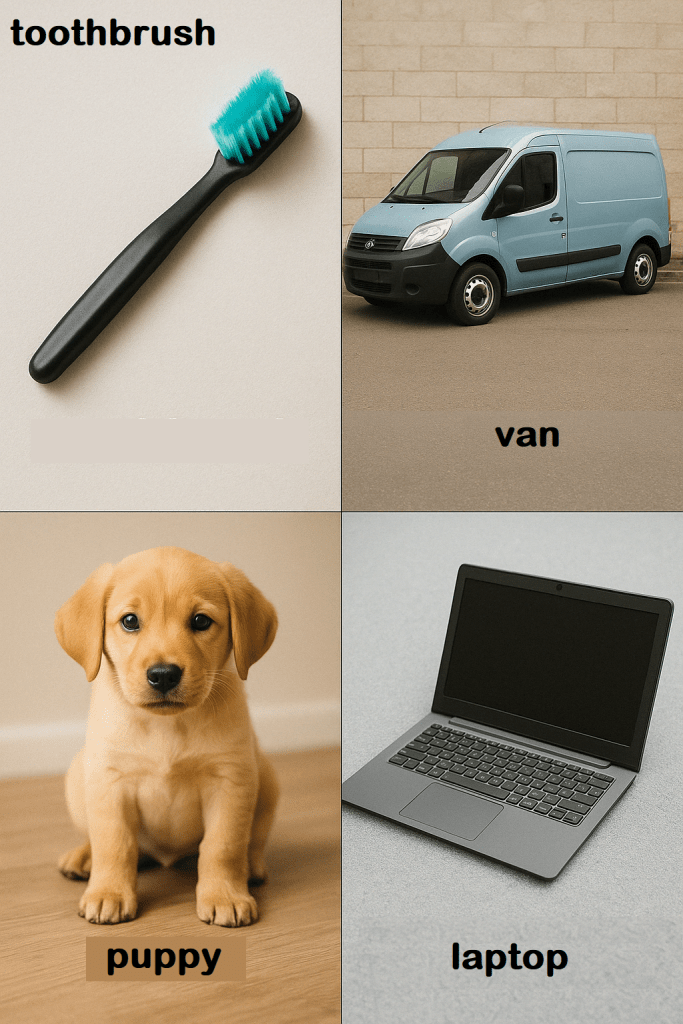
1. toothbrush /ˈtuθˌbrʌʃ/ 牙刷

答案

That is a toothbrush. (那是一支牙刷。) That is your toothbrush. (那是你的牙刷。) That toothbrush is yours. (那只牙刷是你的。)


2. van /væn/ 面包车

答案

That is a van. (那是一辆面包车。) That is your van. (那是你的面包车。) That van is yours. (那辆面包车是你的。)


3. puppy /ˈpʌpi/ 小狗

答案

That is a puppy. (那是一只小狗。) That is your puppy. (那是你的小狗。) That puppy is yours. (那只小狗是你的。)


4. laptop /ˈlæpˌtɑp/ 手提电脑

答案

That is a laptop. (那是一台手提电脑。) That is your laptop. (那是你的手提电脑。) That laptop is yours. (那台手提电脑是你的。)

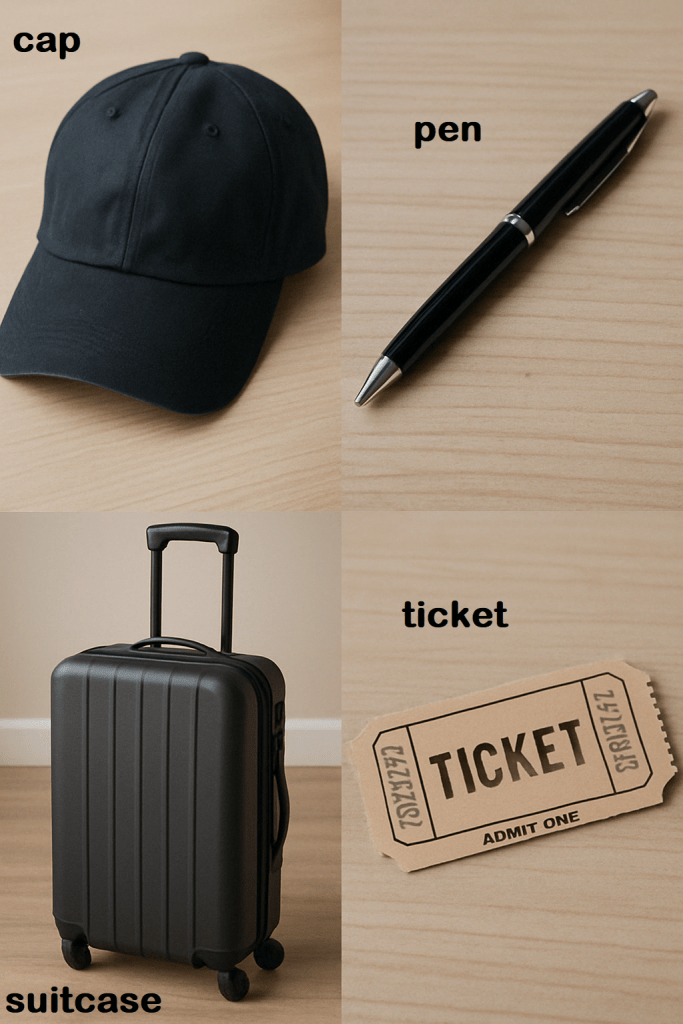
5. cap /kæp/ 帽子(有帽舌的,如棒球帽)

答案

That is a cap. (那是一顶帽子。) That is your cap. (那是你的帽子。) That cap is yours. (那顶帽子是你的。)


6. pen /pen/ 笔

答案

That is a pen. (那是一支笔。) That is your pen. (那是你的笔。) That pen is yours. (那支笔是你的。)


7. suitcase /ˈsutˌkeɪs/ 行李箱

答案

That is a suitcase. (那是一个行李箱。) That is your suitcase. (那是你的行李箱。) That suitcase is yours. (那个行李箱是你的。)


8. ticket /ˈtɪkɪt/ 票;车票;入场券

答案

That is a ticket. (那是一张票。) That is your ticket. (那是你的票。) That ticket is yours. (那张票是你的。)

this/my/mine

练习:用 this,my,mine 造三个句子。

• this = 这个;my… = 我的……;mine = 我的
• this 用于单数或不可数的东西;
• this 用be动词 is;
• 单数的东西用单数形式,如:a book;a computer;
• a 可以被 this,my 取代,如:this book;my computer。

例① book
This is a book. 这是一本书。
This is my book. 这是我的书。
This book is mine. 这本书是我的。

例② computer
This is a computer. 这是一台电脑。
This is my computer. 这是我的电脑。
This computer is mine. 这台电脑是我的。

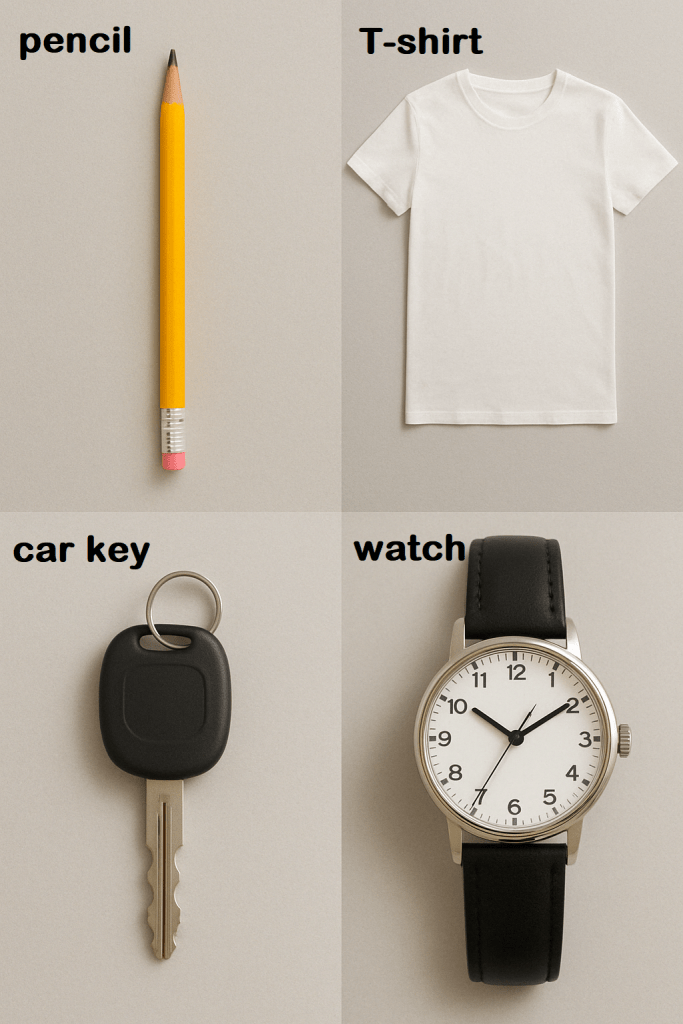
1. pencil /ˈpɛnsl/ 铅笔

答案

This is a pencil. (这是一支铅笔。) This is my pencil. (这是我的铅笔。) This pencil is mine. (这支铅笔是我的。)


2. T-shirt /ˈtiˌʃərt/ T恤衫

答案

This is a T-shirt. (这是一件T恤衫。) This is my T-shirt. (这是我的T恤衫。) This T-shirt is mine. (这件T恤衫是我的。)


3. car key /ˈkɑr ˌki/ 车钥匙

答案

This is a car key. (这是一把车钥匙。) This is my car key. (这是我的车钥匙。) This car key is mine. (这把车钥匙是我的。)


4. watch /wɑtʃ/ 手表

答案

This is a watch. (这是一只手表。) This is my watch. (这是我的手表。) This watch is mine. (这只手表是我的。)

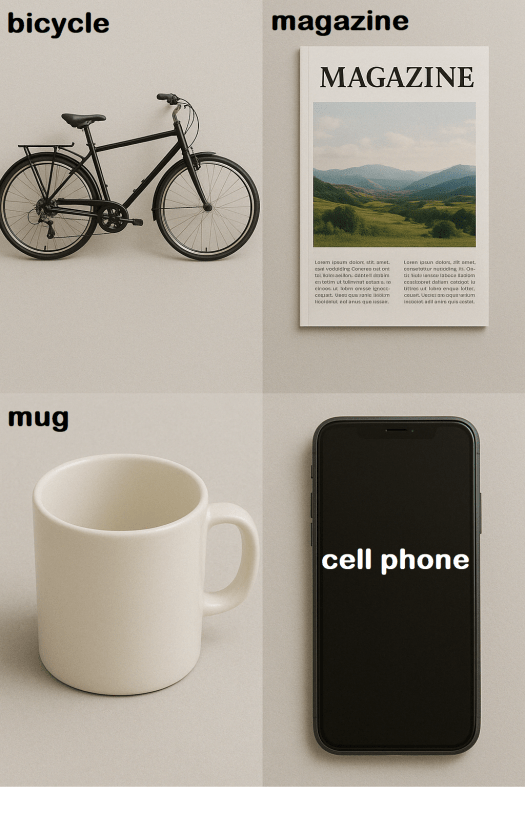
5. bicycle /ˈbaɪsɪkl/ 自行车

答案

This is a bicycle. (这是一辆自行车。) This is my bicycle. (这是我的自行车。) This bicycle is mine. (这辆自行车是我的。)


6. magazine /ˌmæɡəˈzin/ 杂志

答案

This is a magazine. (这是一本杂志。) This is my magazine. (这是我的杂志。) This magazine is mine. (这本杂志是我的。)


7. mug /mʌɡ/ 马克杯

答案

This is a mug. (这是一个马克杯。) This is my mug. (这是我的马克杯。) This mug is mine. (这个马克杯是我的。)


8. cell phone /ˈsɛl ˌfoʊn/ 手机

答案

This is a cell phone. (这是一部手机。) This is my cell phone. (这是我的手机。) This cell phone is mine. (这部手机是我的。)

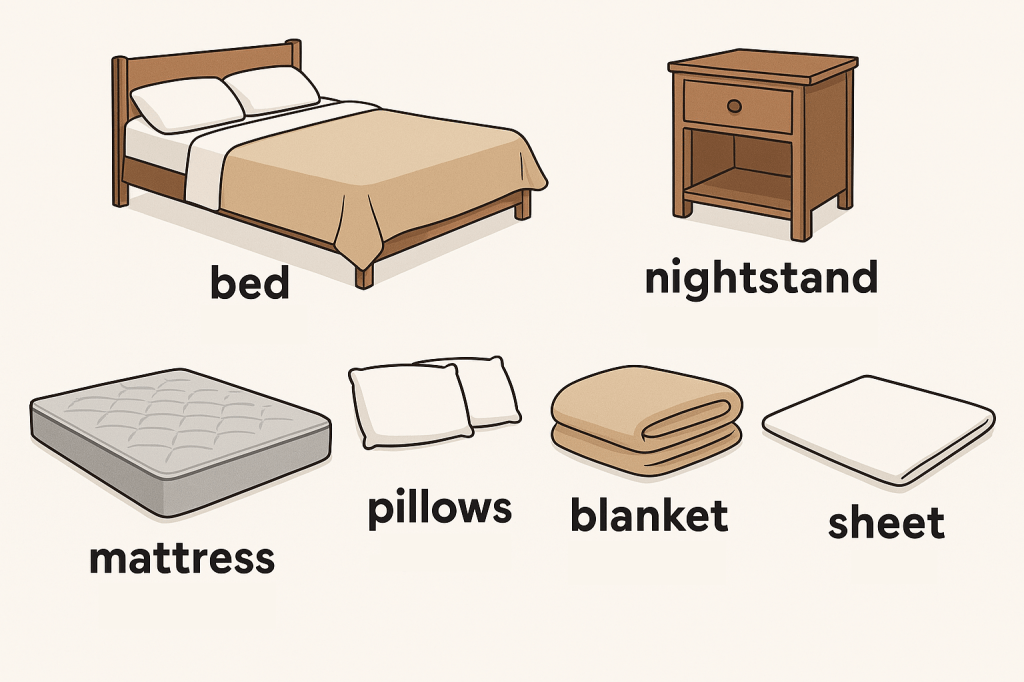
卧室常见物品

家具类

bed /bɛd/ 床
mattress /ˈmætrəs/ 床垫
pillow /ˈpɪloʊ/ 枕头
blanket /ˈblæŋkɪt/ 毯子
sheet /ʃit/ 床单
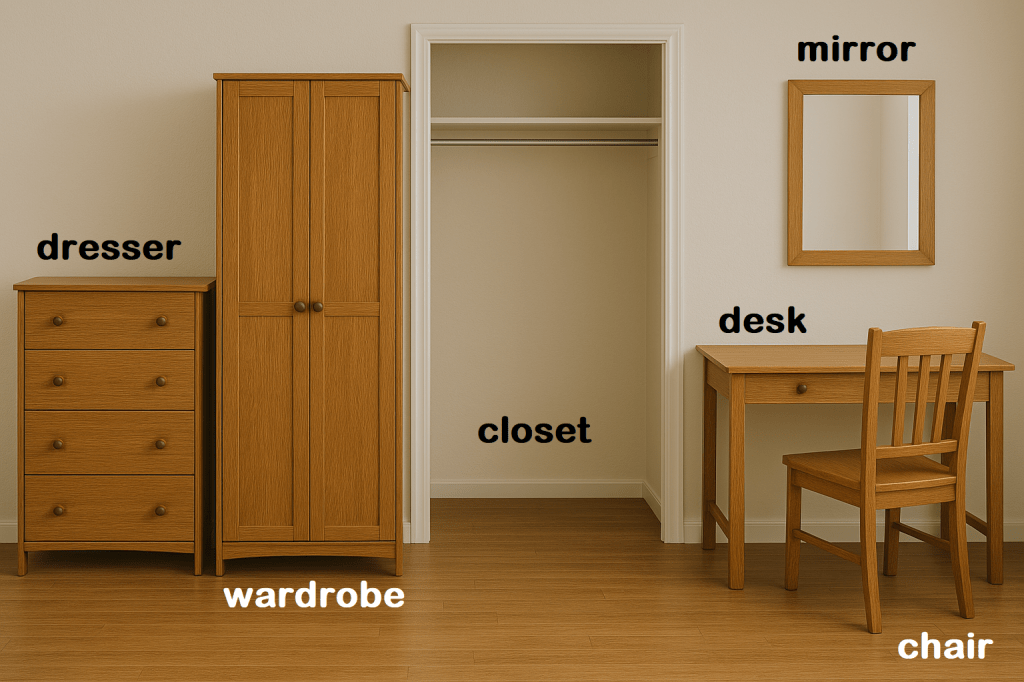
dresser /ˈdrɛsər/ 梳妆台;五斗柜
nightstand /ˈnaɪtˌstænd/ 床头柜
wardrobe /ˈwɔrˌdroʊb/ 衣柜
closet /ˈklɑzɪt/ 衣橱
chair /tʃɛr/ 椅子
desk /dɛsk/ 书桌
mirror /ˈmɪrər/ 镜子

closet 和 wardrobe 的区别:

closet:(嵌入墙内的)衣橱、壁橱
• 通常是房间墙壁里嵌入的空间,带门,里面可以装衣服、杂物等。
• 在美式英语中使用非常普遍。
• closet 更像一个固定结构的一部分,而不是家具。

wardrobe:(独立式)衣柜
• 一种可以移动的家具,通常是木质结构,用于挂衣服或放衣物。
• 它是独立摆放在房间里的,不嵌在墙内。
• 英式英语和美式英语都使用这个词,但在英式英语中更常用。


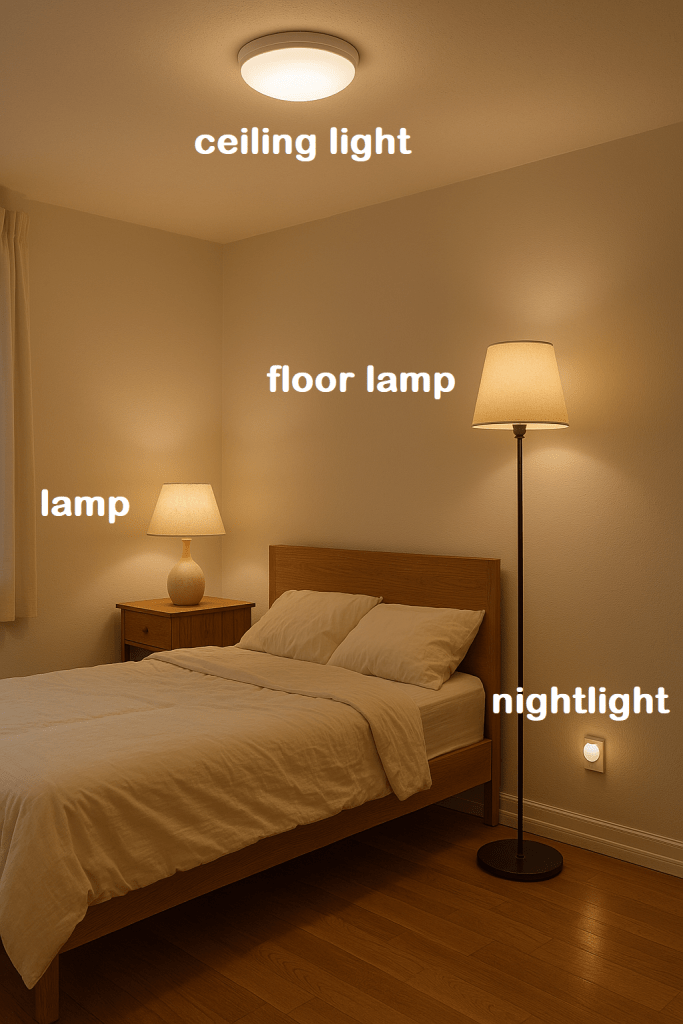
照明类

lamp /læmp/ 灯
floor lamp /flɔr læmp/ 落地灯
ceiling light /ˈsilɪŋ laɪt/ 吊灯;吸顶灯
nightlight /ˈnaɪtˌlaɪt/ 小夜灯

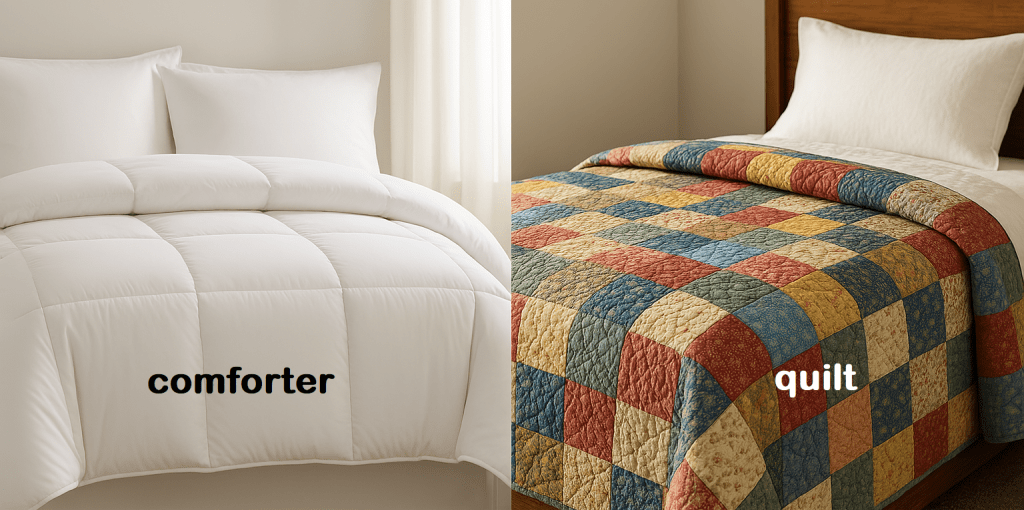
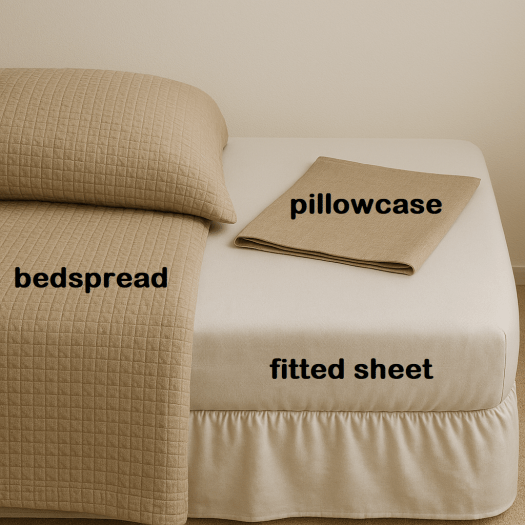
床上用品类

comforter /ˈkʌmfərtər/ 被子
quilt /kwɪlt/ 棉被
bedspread /ˈbɛdˌsprɛd/ 床罩
pillowcase /ˈpɪloʊˌkeɪs/ 枕套
fitted sheet /ˈfɪtɪd ʃit/ 床包(带松紧边的床单)

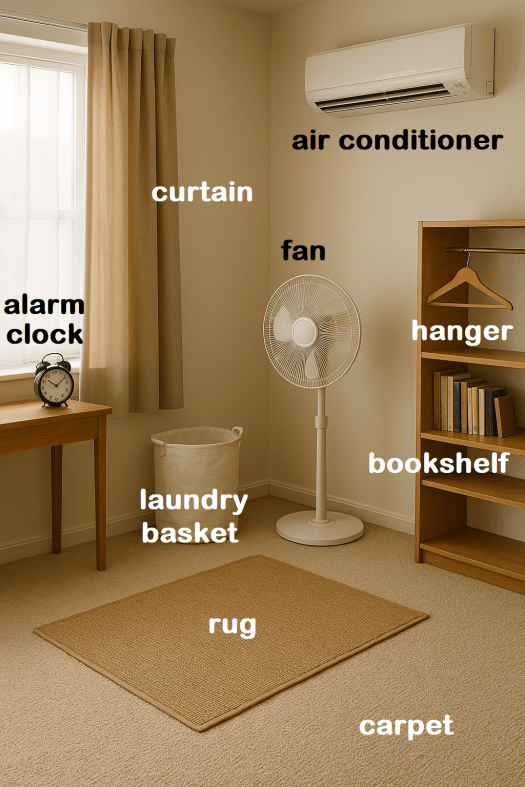
其他物品

alarm clock /əˈlɑrm klɑk/ 闹钟
curtain /ˈkərtən/ 窗帘
rug /rʌɡ/ 地毯(小块)
carpet /ˈkɑrpɪt/ 地毯(大块覆盖)
laundry basket /ˈlɔndri ˌbæskɪt/ 洗衣篮
hanger /ˈhæŋər/ 衣架
fan /fæn/ 风扇
air conditioner /ˈɛr kənˌdɪʃənər/ 空调
bookshelf /ˈbʊkˌʃɛlf/ 书架

双元音 oʊ

单音节

go /goʊ/ 去
no /noʊ/ 不;不是
so /soʊ/ 所以;如此
show /ʃoʊ/ 展示;节目
snow /snoʊ/ 雪
throw /θroʊ/ 扔
blow /bloʊ/ 吹
low /loʊ/ 低的
toe /toʊ/ 脚趾
boat /boʊt/ 船
coat /koʊt/ 外套
road /roʊd/ 道路
soap /soʊp/ 肥皂
joke /dʒoʊk/ 笑话
stone /stoʊn/ 石头

双音节

open /ˈoʊpən/ 打开
hotel /hoʊˈtɛl/ 旅馆
remote /rɪˈmoʊt/ 遥控的;偏远的
alone /əˈloʊn/ 独自
below /bɪˈloʊ/ 在……下面
potato /pəˈteɪtoʊ/ 土豆
hello /həˈloʊ/ 你好
although /ɔlˈðoʊ/ 尽管
frozen /ˈfroʊzən/ 冷冻的
reload /ˌriˈloʊd/ 重新装载
donate /ˈdoʊneɪt/ , /doʊˈneɪt/ 捐赠
photo /ˈfoʊtoʊ/ 照片
coco /ˈkoʊkoʊ/ 可可(椰子或可可饮品)
vocal /ˈvoʊkəl/ 声音的;发声的

三音节或更多音节

telephone /ˈtɛləˌfoʊn/ 电话
microphone /ˈmaɪkrəˌfoʊn/ 麦克风
tomato /təˈmeɪtoʊ/ 番茄
overtake /ˌoʊvərˈteɪk/ 超越
tomorrow /təˈmɑroʊ/ , /təˈmɔroʊ/ 明天
locomotive /ˌloʊkəˈmoʊtɪv/ 火车头;机车
portfolio /pɔrtˈfoʊlioʊ/ 文件夹;作品集
karaoke /ˌkæriˈoʊki/ 卡拉OK
tornado /tɔrˈneɪdoʊ/ 龙卷风
avocado /ˌævəˈkɑdoʊ/ 鳄梨
Oklahoma /ˌoʊkləˈhoʊmə/ 俄克拉荷马州
coronavirus /kəˈroʊnəˌvaɪrəs/ 冠状病毒
notification /ˌnoʊtɪfɪˈkeɪʃən/ 通知
globalization /ˌɡloʊbələˈzeɪʃn/ 全球化
emotionless /ɪˈmoʊʃənləs/ 无感情的

问过去发生的事

想问过去是否做了某事、做了什么、何时做、如何做等,联想句子结构:
Did you + 动词原形 (问是否做过)
What did you + 动词原形(问做了什么)
What time did you + 动词原形(问什么时间做)
How did you + 动词原形(问怎么做)

Did you sleep well last night?
/dɪd jə slip wɛl læst naɪt/
你昨晚睡得好吗?

Did you go to bed early last night?
/dɪd jə ɡoʊ tə bɛd ˈərli læst naɪt/
你昨晚睡得早吗?

What time did you go to bed last night?
/wət taɪm dɪd jə ɡoʊ tə bɛd læst naɪt/
你昨晚几点睡觉?

Did you have breakfast this morning?
/dɪd jə hæv ˈbrɛkfəst ðɪs ˈmɔrnɪŋ/
你今天早上吃早餐了吗?

What did you have for breakfast this morning?
/wət dɪd jə hæv fər ˈbrɛkfəst ðɪs ˈmɔrnɪŋ/
你今天早上早餐吃了什么?

How did you go to school this morning?
/haʊ dɪd jə ɡoʊ tə skul ðɪs ˈmɔrnɪŋ/
你今天早上怎么去学校的?

Did you go to work yesterday?
/dɪd jə ɡoʊ tə wərk ˈjɛstərdeɪ/
你昨天去上班了吗?

Did you get up early this morning?
/dɪd jə ɡɛt əp ˈərli ðɪs ˈmɔrnɪŋ/
你今天早上起得早吗?

What time did you get up this morning?
/wət taɪm dɪd jə ɡɛt əp ðɪs ˈmɔrnɪŋ/
你今天早上几点起床?


考一考自己,英语怎么说:

你昨晚睡得好吗?

答案

Did you sleep well last night?

你昨晚睡得早吗?

答案

Did you go to bed early last night?

你昨晚几点睡觉?

答案

What time did you go to bed last night?

你今天早上吃早餐了吗?

答案

Did you have breakfast this morning?

你今天早上早餐吃了什么?

答案

What did you have for breakfast this morning?

你今天早上怎么去学校的?

答案

How did you go to school this morning?

你昨天去上班了吗?

答案

Did you go to work yesterday?

你今天早上起得早吗?

答案

Did you get up early this morning?

你今天早上几点起床?

答案

What time did you get up this morning?

问个人习惯

聊个人日常习惯,会重复做的事,联想句型:
Do you + 动词原形…? / What time do you…? / How do you…?

Do you go to bed early?
/də yə ɡoʊ tə bɛd ˈərli/
你睡得早吗?

Do you go to bed late?
/də yə ɡoʊ tə bɛd leɪt/
你睡得晚吗?

What time do you go to bed?
/wət taɪm də yə ɡoʊ tə bɛd/
你几点睡觉?

Do you get up early?
/də yə ɡɛɾ əp ˈərli/
你起得早吗?

Do you get up late?
/də yə ɡɛɾ əp leɪt/
你起得晚吗?

What time do you get up?
/wət taɪm də yə ɡɛɾ əp/
你几点起床?

Do you drive to work?
/də yə draɪv tə wərk/
你开车去上班吗?

How do you go to work?
/haʊ də yə ɡoʊ tə wərk/
你怎么去上班?

What do you eat for breakfast?
/wət də yə it fər ˈbrɛkfəst/
你早餐吃什么?


考一考自己,英语怎么说:

你睡得早吗?

答案

Do you go to bed early?

你睡得晚吗?

答案

Do you go to bed late?

你几点睡觉?

答案

What time do you go to bed?

你起得早吗?

答案

Do you get up early?

你起得晚吗?

答案

Do you get up late?

你几点起床?

答案

What time do you get up?

你开车去上班吗?

答案

Do you drive to work?

你怎么去上班?

答案

How do you go to work?

你早餐吃什么?

答案

What do you eat for breakfast?