问个人习惯

聊个人日常习惯,会重复做的事,联想句型:
Do you + 动词原形…? / What time do you…? / How do you…?

Do you go to bed early?
/də yə ɡoʊ tə bɛd ˈərli/
你睡得早吗?

Do you go to bed late?
/də yə ɡoʊ tə bɛd leɪt/
你睡得晚吗?

What time do you go to bed?
/wət taɪm də yə ɡoʊ tə bɛd/
你几点睡觉?

Do you get up early?
/də yə ɡɛɾ əp ˈərli/
你起得早吗?

Do you get up late?
/də yə ɡɛɾ əp leɪt/
你起得晚吗?

What time do you get up?
/wət taɪm də yə ɡɛɾ əp/
你几点起床?

Do you drive to work?
/də yə draɪv tə wərk/
你开车去上班吗?

How do you go to work?
/haʊ də yə ɡoʊ tə wərk/
你怎么去上班?

What do you eat for breakfast?
/wət də yə it fər ˈbrɛkfəst/
你早餐吃什么?


考一考自己,英语怎么说:

你睡得早吗?

答案

Do you go to bed early?

你睡得晚吗?

答案

Do you go to bed late?

你几点睡觉?

答案

What time do you go to bed?

你起得早吗?

答案

Do you get up early?

你起得晚吗?

答案

Do you get up late?

你几点起床?

答案

What time do you get up?

你开车去上班吗?

答案

Do you drive to work?

你怎么去上班?

答案

How do you go to work?

你早餐吃什么?

答案

What do you eat for breakfast?

元音 ɑ

单音节单词:

hot /hɑt/ 热的
cot /kɑt/ 小床
pot /pɑt/ 锅
rock /rɑk/ 岩石
top /tɑp/ 顶部
lot /lɑt/ 一块地;许多
stop /stɑp/ 停止
dock /dɑk/ 码头
job /dʒɑb/ 工作
cop /kɑp/ 警察(口语)

双音节单词:

father /ˈfɑðər/ 父亲
honest /ˈɑnəst/ 诚实的
doctor /ˈdɑktər/ 医生
socket /ˈsɑkət/ 插座;窝
product /ˈprɑdʌkt/ 产品
common /ˈkɑmən/ 普通的
body /ˈbɑdi/ 身体
dollar /ˈdɑlər/ 美元
problem /ˈprɑbləm/ 问题

三音节或更多音节的单词

avocado /ˌɑvəˈkɑdoʊ/;/ˌævəˈkɑdoʊ/ 鳄梨
Chicago /ʃɪˈkɑɡoʊ/ 芝加哥
Colorado /ˌkɑləˈrædoʊ/ 科罗拉多州
philosophy /fəˈlɑsəfi/ 哲学
impossible /ɪmˈpɑsəbəl/ 不可能的
apology /əˈpɑlədʒi/ 道歉
photography /fəˈtɑɡrəfi/ 摄影
biology /baɪˈɑlədʒi/ 生物学
democracy /dɪˈmɑkrəsi/ 民主


美式英语里常见、且发音里包含 /ɑ/ 的高频词(按“通常很常用→相对也很常用”的顺序)

on /ɑn/ 在……上;在(某天/某处)
not /nɑt/ 不;不是
from /frɑm/ 从;来自 (或 /frəm/ , /frʌm/)
got /ɡɑt/ 得到;(have got)有
want /wɑnt/ 想要
are /ɑr/ 是(be 动词复数/第二人称,强读)
job /dʒɑb/ 工作
top /tɑp/ 顶部;最上面
stop /stɑp/ 停止
lot /lɑt/ 很多;一堆;(a lot)很多
mom /mɑm/ 妈妈
body /ˈbɑdi/ 身体
sorry /ˈsɑri/ 抱歉的;对不起
problem /ˈprɑbləm/ 问题
probably /ˈprɑbəbli/ 可能;大概
hot /hɑt/ 热的
box /bɑks/ 盒子
watch /wɑtʃ/ 看;手表
wash /wɑʃ/ 洗
rock /rɑk/ 岩石;摇滚
clock /klɑk/ 钟
knock /nɑk/ 敲
shop /ʃɑp/ 商店;购物
shot /ʃɑt/ 射击;镜头;一针(疫苗)
drop /drɑp/ 掉落;滴
father /ˈfɑðər/ 父亲
far /fɑr/ 远的;远地
car /kɑr/ 汽车
bar /bɑr/ 酒吧;条;栅栏
start /stɑrt/ 开始
part /pɑrt/ 部分
hard /hɑrd/ 困难的;努力地
card /kɑrd/ 卡片
dark /dɑrk/ 黑暗的
park /pɑrk/ 公园;停车
mark /mɑrk/ 标记;分数
market /ˈmɑrkɪt/ 市场
heart /hɑrt/ 心;心脏
art /ɑrt/ 艺术
large /lɑrdʒ/ 大的
charge /tʃɑrdʒ/ 收费;指控;充电
party /ˈpɑrti/ 聚会;党派
yard /yɑrd/ 院子;码
smart /smɑrt/ 聪明的
chart /tʃɑrt/ 图表
farm /fɑrm/ 农场
arm /ɑrm/ 手臂;武装
alarm /əˈlɑrm/ 闹钟;警报
apartment /əˈpɑrtmənt/ 公寓
dollar /ˈdɑlər/ 美元
doctor /ˈdɑktər/ 医生
hospital /ˈhɑspɪtəl/ 医院
coffee /ˈkɑfi/ 咖啡(或 /ˈkɔfi/)
college /ˈkɑlɪdʒ/ 大学
copy /ˈkɑpi/ 复制;一份(副本)
common /ˈkɑmən/ 常见的
comment /ˈkɑmɛnt/ 评论
contact /ˈkɑntækt/ 联系;联系人
contract /ˈkɑntrækt/ 合同(名词常见读法之一)
possible /ˈpɑsəbəl/ 可能的
option /ˈɑpʃən/ 选项
opportunity /ˌɑpərˈtunəti/ 机会
office /ˈɑfəs/ 办公室(或 /ˈɔfəs/)
offer /ˈɑfər/ 提供;报价
often /ˈɑfən/ 经常(或 /ˈɔfn/ , /ˈɑfn/ , /ˈɔftən/ , /ˈɑftən/)
process /ˈprɑsɛs/ 过程
progress /ˈprɑɡrɛs/ 进展(或 /ˈprɑɡrəs/ )
project /ˈprɑdʒekt/ 项目(名词常读)
product /ˈprɑdʌkt/ 产品
properly /ˈprɑpərli/ 正确地;妥善地
property /ˈprɑpərti/ 财产;属性
popular /ˈpɑpyələr/ 受欢迎的
culture /ˈkʌltʃər/(不含 /ɑ/)※这个不算,跳过
topic /ˈtɑpɪk/ 话题
model /ˈmɑdl/ 模型;模特
modern /ˈmɑdərn/ 现代的
policy /ˈpɑləsi/ 政策
politics /ˈpɑləˌtɪks/ 政治
quality /ˈkwɑləti/ 质量(很多美式口音为 /ɑ/)
knowledge /ˈnɑlɪdʒ/ 知识
bottom /ˈbɑtəm/ 底部
follow /ˈfɑloʊ/ 跟随;关注
borrow /ˈbɑroʊ/ 借(入)(或 /ˈbɔroʊ/ )
tomorrow /təˈmɑroʊ/ 明天 (或 /təˈmɑroʊ/)
honest /ˈɑnəst/ 诚实的
honor /ˈɑnər/ 荣誉;尊敬
online /ˌɑnˈlaɪn/ 在线的 (或 /ˌɔnˈlaɪn/ )
object /ˈɑbdʒekt/ 物体(名词)
obstacle /ˈɑbstəkəl/ 障碍
obvious /ˈɑbviəs/ 明显的
hard-working /ˌhɑrdˈwərkɪŋ/ 勤奋的
marketing /ˈˈmɑrkət̮ɪŋ/ 市场营销

一般过去时/肯定陈述句→肯定疑问句

一般过去时的肯定陈述句改为肯定疑问句

例① :She worked yesterday. (她昨天工作了。)
Did she work yesterday? (她昨天工作了吗?)

例②:They worked at a restaurant. (他们在一家餐厅工作过。)
Did they work at a restaurant? (他们在一家餐厅工作过吗?)

做练习前先把这些动词的过去时学会(原形动词 – 过去时动词):
工作:work – worked;
去:go – went;
买:buy – bought;
制作:make – made;
下雨:rain – rained;
来:come – came;
睡觉:sleep – slept;
暂住:stay – stayed

练习

1. He worked from home. (他在家工作。)

答案

Did he work from home? (他在家工作吗?)


2. You went to Thailand. (你去了泰国。)

答案

Did you go to Thailand? (你去了泰国吗?)


3. They bought a new car. (他们买了一辆新车。)

答案

Did they buy a new car? (他们买了一辆新车吗?)


4. She made a birthday cake. (她做了一个生日蛋糕。)

答案

Did she make a birthday cake? (她做了一个生日蛋糕吗?)


5. It rained last night. (昨晚下雨了。)

答案

Did it rain last night?(昨晚下雨了吗?)


6. He came home late. (他很晚才回家。)

答案

Did he come home late? (他很晚才回家吗?)


7. You slept well last night. (你昨晚睡得很好。)

答案

Did you sleep well last night? (你昨晚睡得好吗?)


8. They stayed at a hotel. (他们住在一家酒店里。)

答案

Did they stay at a hotel? (他们住在一家酒店里吗?)

一般现在时/肯定陈述句→肯定疑问句

一般现在时的肯定陈述句改为肯定疑问句

例① :They work here. (他们在这里工作。)
Do they work here? (他们在这里工作吗?)

例②:He works at a factory. (他在一家工厂工作。)
  Does he work at a factory? (他在一家工厂工作吗?)

练习


1. She takes care of her brothers. (她照顾她的弟弟们。)

答案

Does she take care of her brothers? (她照顾她的弟弟们吗?)


2. He lives in the city. (他住在城市里。)

答案

Does he live in the city? (他住在城市里吗?)


3. You know the answer. (你知道答案。)

答案

Do you know the answer? (你知道答案吗?)


4. They come from Singapore. (他们来自新加坡。)

答案

Do they come from Singapore? (他们来自新加坡吗?)


5. It snows here. (这里会下雪。)

答案

Does it snow here? (这里会下雪吗?)


6. You get up early. (你起得很早。)

答案

Do you get up early? (你起得很早吗?)


7. She goes to bed late. (她很晚才睡觉。)

答案

Does she go to bed late? (她很晚才睡觉吗?)


8. He works hard. (他工作努力。)

答案

Does he work hard? (他工作努力吗?)

元音 ɔ

单音节单词:

law /lɔ/ 法律
talk /tɔk/ 说话
walk /wɔk/ 行走
ball /bɔl/ 球
call /kɔl/ 打电话、叫
door /dɔr/ 门
floor /flɔr/ 地板
short /ʃɔrt/ 短的
port /pɔrt/ 港口
sword /sɔrd/ 剑(注意不发 w)

双音节单词:

author /ˈɔθər/ 作者
daughter /ˈdɔt̮ər/ 女儿
order /ˈɔrdər/ 命令、顺序
morning /ˈmɔrnɪŋ/ 早上
calling /ˈkɔlɪŋ/ 呼唤、职业
lawyer /ˈlɔjər/ 律师
border /ˈbɔrdər/ 边界
corner /ˈkɔrnər/ 角落

三音节或更多音节单词:

important /ɪmˈpɔrtnt/ 重要的
supportive /səˈpɔrt̮ɪv/ 支持的
reporter /rɪˈpɔrt̮ər/ 记者
auditorium /ˌɔdəˈtɔriəm/ 礼堂
exploratory /ɪkˈsplɔrəˌtɔri/ 探索性的
authority /əˈθɔrət̮i/ 权威


美式英语里常见、且发音里包含 /ɔ/ 的高频词(按“通常很常用→相对也很常用”的顺序)

all /ɔl/ 所有
or /ɔr/ 或者
for /fɔr/ 为了;给
more /mɔr/ 更多
your /yɔr/ 你的
call /kɔl/ 打电话;呼叫
small /smɔl/ 小的
talk /tɔk/ 说话;谈论
walk /wɔk/ 走路
always /ˈɔlweɪz/ 总是
also /ˈɔlsoʊ/ 也;此外
already /ɔlˈrɛdi/ 已经
off /ɔf/ 离开;关闭
often /ˈɔfən/ 经常
long /lɔŋ/ 长的;很久
wrong /rɔŋ/ 错误的
strong /strɔŋ/ 强壮的;强的
song /sɔŋ/ 歌曲
law /lɔ/ 法律
saw /sɔ/ 看见(see过去式)
draw /drɔ/ 画;拉
thought /θɔt/ 想法;思考(think过去式)
bought /bɔt/ 买了(buy过去式)
brought /brɔt/ 带来(bring过去式)
caught /kɔt/ 抓住(catch过去式)
taught /tɔt/ 教(teach过去式)
water /ˈwɔtər/ 水
coffee /ˈkɔfi/ 咖啡
dog /dɔg/ 狗
watch /wɔtʃ/ 看;手表
want /wɔnt/ 想要
because /bɪˈkɔz/ 因为
office /ˈɔfɪs/ 办公室
awesome /ˈɔsəm/ 很棒的
awful /ˈɔfəl/ 糟糕的;可怕的
fall /fɔl/ 落下;秋天
wall /wɔl/ 墙
ball /bɔl/ 球
hall /hɔl/ 大厅
morning /ˈmɔrnɪŋ/ 早晨
story /ˈstɔri/ 故事
sorry /ˈsɔri/ 抱歉
short /ʃɔrt/ 短的
sport /spɔrt/ 运动
north /nɔrθ/ 北方
order /ˈɔrdər/ 订单;命令
corner /ˈkɔrnər/ 角落
store /stɔr/ 商店
door /dɔr/ 门
floor /flɔr/ 地板;楼层
board /bɔrd/ 板;董事会
four /fɔr/ 四
warm /wɔrm/ 温暖的
toward /təˈwɔrd/ 朝;向
daughter /ˈdɔtər/ 女儿
lawyer /ˈlɔyər/ 律师
salt /sɔlt/ 盐
fault /fɔlt/ 错误;过失
boss /bɔs/ 老板
problem /ˈprɔbləm/ 问题
soft /sɔft/ 柔软的
lost /lɔst/ 失去;迷路的
cost /kɔst/ 花费;成本
cross /krɔs/ 穿过;十字
walked /wɔkt/ 走了
talked /tɔkt/ 说了
called /kɔld/ 打电话;称为
fallen /ˈfɔlən/ 已落下
walking /ˈwɔkɪŋ/ 走路
talking /ˈtɔkɪŋ/ 说话
caller /ˈkɔlər/ 来电者
almost /ˈɔlmoʊst/ 几乎
altogether /ˌɔltəˈgɛðər/ 完全;总共
although /ɔlˈðoʊ/ 虽然
pause /pɔz/ 暂停
cause /kɔz/ 原因;导致
audience /ˈɔdiyəns/ 观众
August /ˈɔgəst/ 八月
author /ˈɔθər/ 作者
autumn /ˈɔtəm/ 秋天
ordinary /ˈɔrdəˌnɛri/ 普通的
organize /ˈɔrgəˌnaɪz/ 组织
origin /ˈɔrədʒɪn/ 起源
orange /ˈɔrɪndʒ/ 橙子;橙色
Oregon /ˈɔrɪgən/ 俄勒冈州
Florida /ˈflɔrɪdə/ 佛罗里达州
California /ˌkæləˈfɔrnyə/ 加利福尼亚州
tomorrow /təˈmɔroʊ/ 明天
borrow /ˈbɔroʊ/ 借入
sorrow /ˈsɔroʊ/ 悲伤
storm /stɔrm/ 暴风雨
normal /ˈnɔrməl/ 正常的
formal /ˈfɔrməl/ 正式的
reward /rɪˈwɔrd/ 奖励
forward /ˈfɔrwərd/ 向前
afford /əˈfɔrd/ 买得起;负担得起
record /rɪˈkɔrd/ 记录
support /səˈpɔrt/ 支持
report /rɪˈpɔrt/ 报告

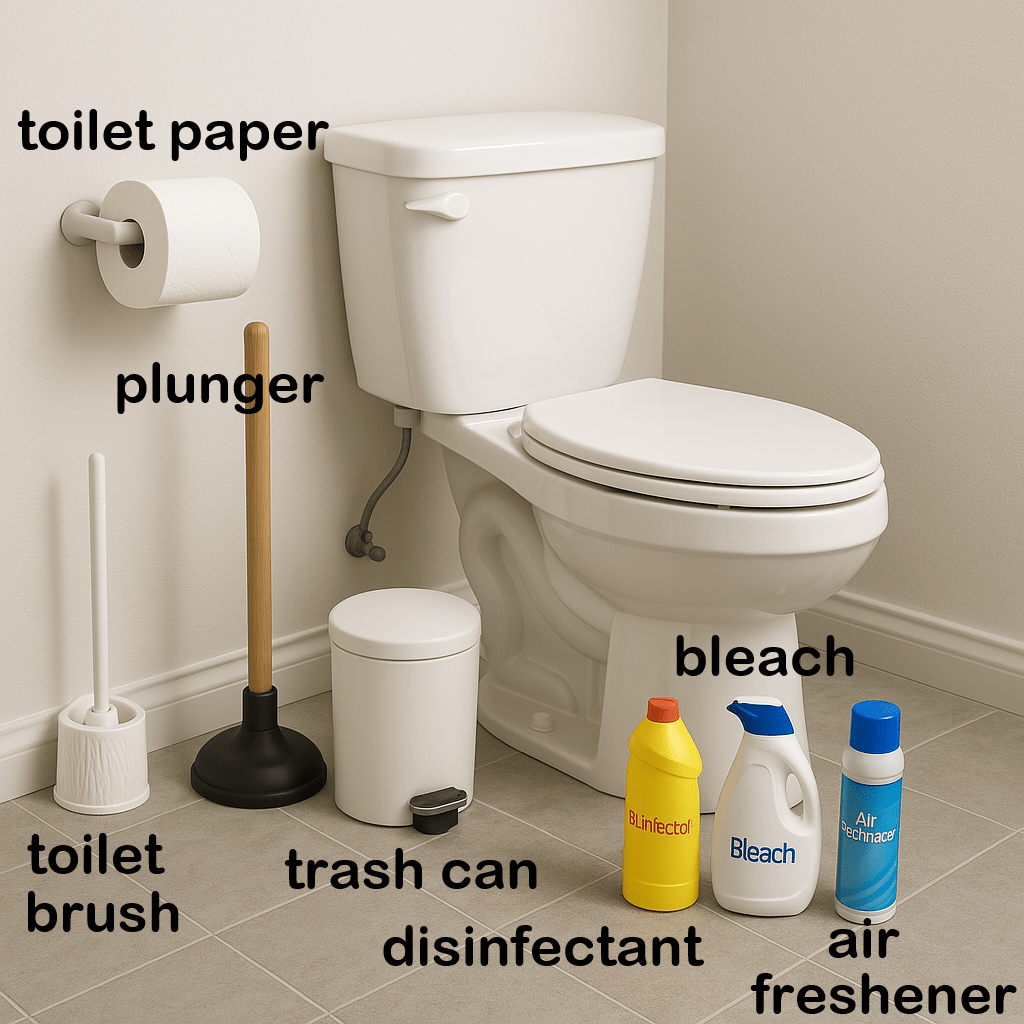
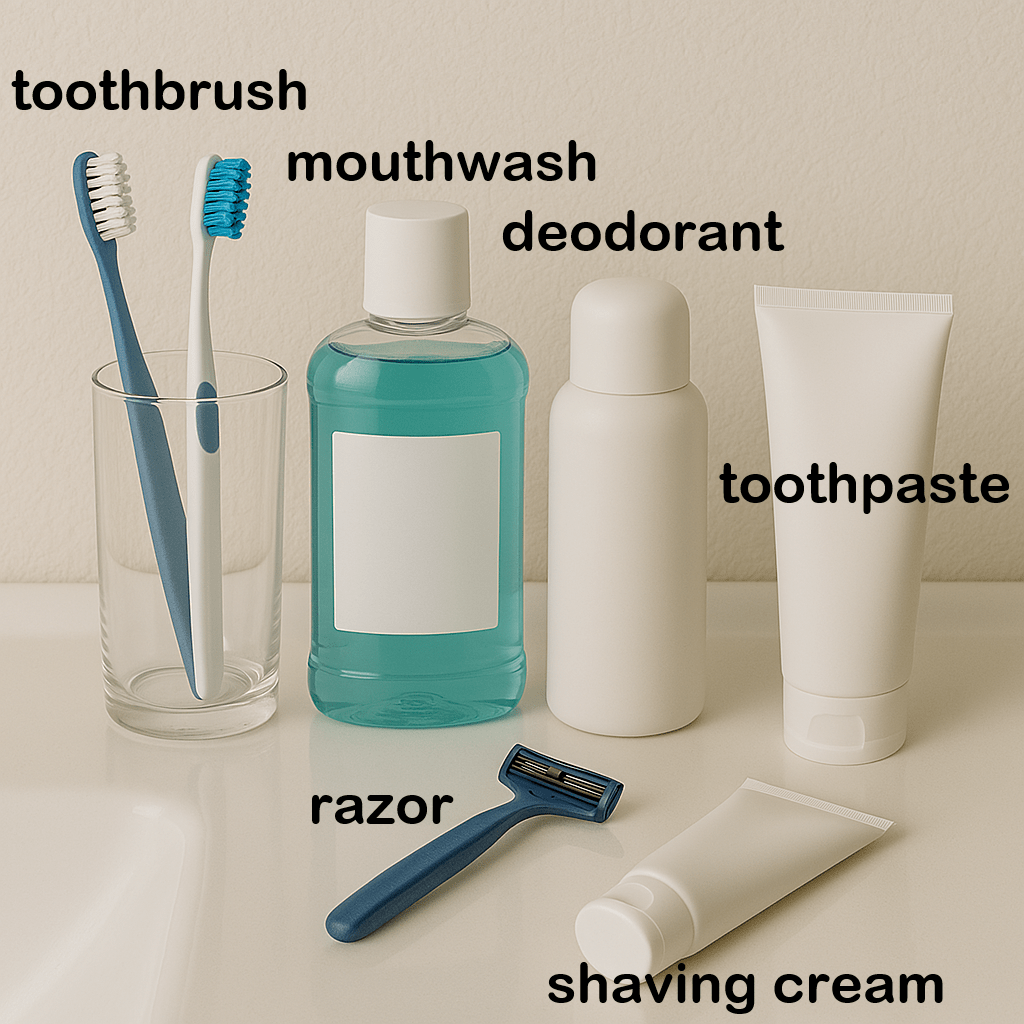
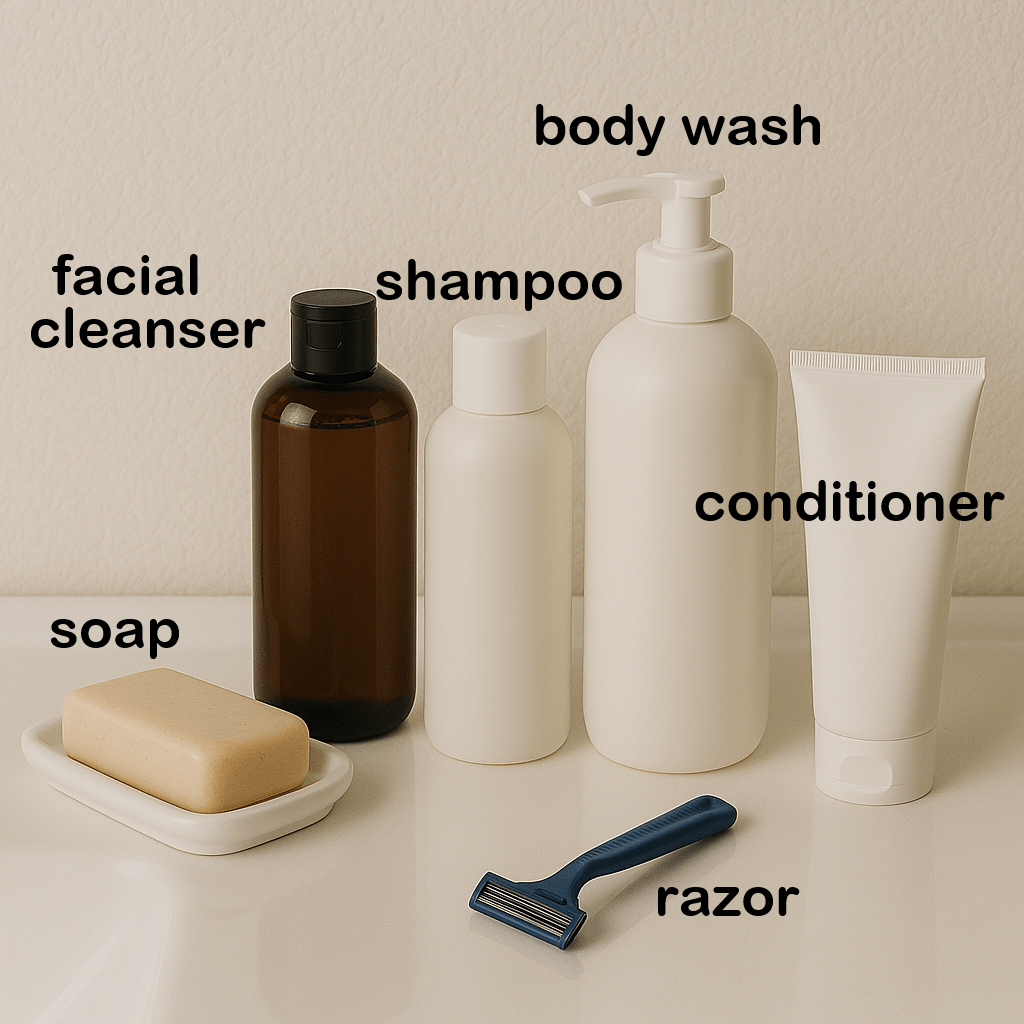
卫生间常见物品

🚽基础设施类(Bathroom Fixtures)

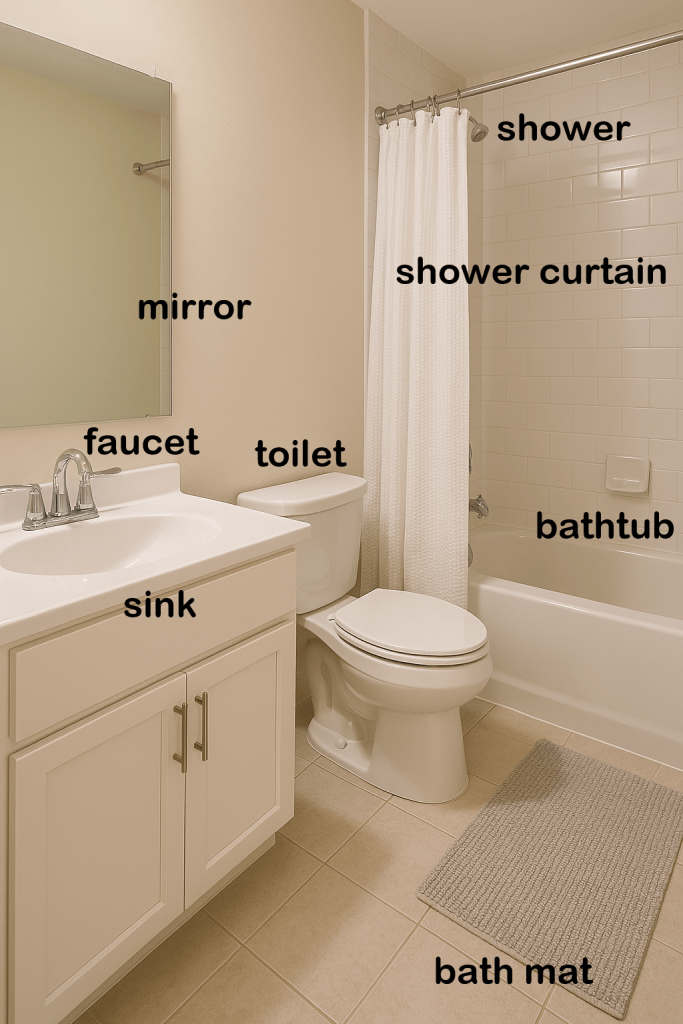
toilet /ˈtɔɪlət/ 马桶
sink /sɪŋk/ 洗手池
mirror /ˈmɪrər/ 镜子
shower /ˈʃaʊər/ 淋浴器
bathtub /ˈbæθˌtʌb/ 浴缸
faucet /ˈfɔsət/ 水龙头
drain /dreɪn/ 排水孔
shower curtain /ˈʃaʊər ˌkərtn/ 浴帘
bath mat /ˈbæθ ˌmæt/ 浴室地垫


🧻 清洁与卫生用品(Hygiene and Cleaning Items)

toilet paper /ˈtɔɪlət ˌpeɪpər/ 卫生纸
toilet brush /ˈtɔɪlət ˌbrʌʃ/ 马桶刷
plunger /ˈplʌndʒər/ 马桶吸盘
trash can /ˈtræʃ ˌkæn/ 垃圾桶
disinfectant /ˌdɪsɪnˈfektənt/ 消毒液
bleach /blitʃ/ 漂白剂
air freshener /ˈer ˌfreʃənər/ 空气清新剂

🪥 个人护理用品(Personal Care Items)

toothbrush /ˈtuθˌbrʌʃ/ 牙刷
toothpaste /ˈtuθˌpeɪst/ 牙膏
mouthwash /ˈmaʊθˌwɑʃ/ 漱口水
soap /soʊp/ 肥皂
shampoo /ʃæmˈpu/ 洗发水
conditioner /kənˈdɪʃənər/ 护发素
body wash /ˈbɑdi ˌwɑʃ/ 沐浴露
facial cleanser /ˈfeɪʃəl ˌklɛnzər/ 洁面乳
deodorant /diˈoʊdərənt/ 止汗剂
razor /ˈreɪzər/ 剃须刀
shaving cream /ˈʃeɪvɪŋ ˌkrim/ 剃须膏

🧺 毛巾与衣物用品(Towels & Clothing Items)

towel /ˈtaʊəl/ 毛巾
hand towel /ˈhænd ˌtaʊəl/ 擦手巾
bath towel /ˈbæθ ˌtaʊəl/ 浴巾
bathrobe /ˈbæθˌroʊb/ 浴袍
laundry basket /ˈlɔndri ˌbæskɪt/ 洗衣篮
dirty clothes /ˈdərti ˌkloʊðz/ 脏衣服

元音 u

单音节单词:

food /fud/ 食物
boot /but/ 靴子
mood /mud/ 心情
loop /lup/ 回路、环
school /skul/ 学校
pool /pul/ 游泳池
zoo /zu/ 动物园
moon /mun/ 月亮
cool /kul/ 酷的;凉快的
rude /rud/ 粗鲁的

双音节单词:

noodle /ˈnudl/ 面条
student /ˈstudənt/ 学生
toothache /ˈtuθeɪk/ 牙痛
bluebird /ˈblubərd/ 蓝知更鸟
coupon /ˈkupɑn/ 优惠券
ruler /ˈrulər/ 尺子;统治者
bamboo /bæmˈbu/ 竹子
balloon /bəˈlun/ 气球
racoon /ræˈkun/ 浣熊

三音节或更多音节单词:

university /ˌyunəˈvərsət̬i/ 大学
recruitment /rɪˈkrutmənt/ 招聘
kangaroo /ˌkæŋɡəˈru/ 袋鼠
opportunity /ˌɑpərˈtunət̬i/ 机会
individual /ˌɪndəˈvɪdʒuəl/ 个人
distributor /dɪˈstrɪbjət̬ər/ 分销商
supermarket /ˈsupərmɑrkɪt/ 超市
revolutionary /ˌrevəˈluʃəneri/ 革命的
enthusiastic /ɪnˌθuziˈæstɪk/ 热情的


美式英语里常见、且发音里包含 /u/ 的高频词(按“通常很常用→相对也很常用”的顺序)

you /yu/ 你
do /du/ 做;干
too /tu/ 也;太
two /tu/ 二
who /hu/ 谁
new /nu/ 新的
knew /nu/ 知道(know 的过去式)
news /nuz/ 新闻
use /yuz/ 使用
user /ˈyuzər/ 用户
movie /ˈmuvi/ 电影
music /ˈmyuzɪk/ 音乐
musician /myuˈzɪʃən/ 音乐家
student /ˈstudənt/ 学生(首音节 /stu/)
studio /ˈstudiˌoʊ/ 录音室;工作室
school /skul/ 学校
tool /tul/ 工具
cool /kul/ 酷;凉爽
pool /pul/ 池;(游泳)池塘
food /fud/ 食物
room /rum/ 房间
broom /brum/ 扫帚
boom /bum/ 迅速发展;繁荣
moon /mun/ 月亮
noon /nun/ 正午
soon /sun/ 很快
June /dʒun/ 六月
tune /tun/ 曲调;调音
tube /tub/ 管;管子;(美)地铁车厢(英)
true /tru/ 真的;真实的
through /θru/ 通过;穿过
threw /θru/(throw 的过去式)投掷了
blue /blu/ 蓝色的
clue /klu/ 线索;提示
glue /glu/ 胶;粘合剂
group /ɡrup/ 组;群体
fruit /frut/ 水果
suit /sut/ 套装;适合
suitcase /ˈsutˌkeɪs/ 行李箱
suitable /ˈsutəbl/ 适合的
super /ˈsupər/ 超级的;很棒的
supermarket /ˈsupərˌmɑrkɪt/ 超级市场
boot /but/ 靴子
booth /buθ/ 货摊;(投票)隔间
cooling /ˈkulɪŋ/ 冷却
move /muv/ 移动;搬家
moved /muvd/ 移动了
moviegoer /ˈmuviˌɡoʊər/ 电影观众
human /ˈhyumən/ 人类的
huge /hyudʒ/ 巨大的
whoever /huˈɛvər/ 无论谁
whom /hum/(正式用法)谁(宾格)
whose /huz/ 谁的(属格)
duty /ˈduti/ 责任;税
due /du/ 到期的;应得的
duke /duk/ 公爵;杜克
July /dʒuˈlaɪ/ 七月
juice /dʒus/ 果汁
juice bar /dʒus bɑr/ 果汁吧(短语)
rude /rud/ 无礼的;粗鲁的
rule /rul/ 规则;统治
ruler /ˈrulər/ 尺子;统治者
roommate /ˈrumˌmeɪt/ 室友
routine /ruˈtin/ 例行的;常规
ruin /ˈruɪn/ 毁灭;破坏
roof /ruf/ 屋顶
roofing /ˈrufɪŋ/ 屋顶材料
fool /ful/ 傻瓜
foolish /ˈfulɪʃ/ 愚蠢的
future /ˈfyutʃər/ 未来
fuel /ˈfyuəl/ 燃料 (或 /fyul/)
museum /myuˈziəm/ 博物馆
mute /mut/ 不出声的;静音
mule /mul/ 骡子
mood /mud/ 情绪;心情
moody /ˈmudi/ 情绪化的
mutual /ˈmyutʃuəl/ 相互的
soup /sup/ 汤
soup kitchen /sup ˈkɪtʃən/ 救济食堂(短语)
suicide /ˈsuəˌsaɪd/ 自杀
superior /suˈpirior/ 更高的
sushi /ˈsuʃi/ 寿司
stew /stu/ 炖菜
stupid /ˈstupɪd/ 愚蠢的

一般过去时

一般过去时的陈述句和疑问句。

用提供的主语和动词短语写出一般过去时的四个句子:
a. 肯定陈述句;
b. 否定陈述句;
c. 肯定疑问句;
d. 否定疑问句;

示例:he / work
a. He worked. 他(过去)工作。(肯定陈述句)
b. He did not work. 他(过去)没工作。(否定陈述句)
c. Did he work? 他(过去)工作吗?(肯定疑问句)
d. Did he not work? 他(过去)没工作吗?(否定疑问句)

练习:

1. you / go shopping (你/去购物)
2. they / see the movie (他们/看那部电影)
3. she / have breakfast (她/吃早餐)
4. he / do his homework (他/做作业)
5. they / get married (他们/结婚)
6. you / drive to work (你/开车去上班)
7. we / play soccer (我们/踢足球)
8. he / take a shower (他/淋浴)

动词的过去时:
go → went; see → saw; have → had; do → did; get → got; drive → drove; play → played; take → took.

答案:

1. you / go shopping (你/去购物)

答案

a. You went shopping. b. You did not go shopping. c. Did you go shopping? d. Did you not go shopping?

2. they / see the movie (他们/看那部电影)

答案

a. They saw the movie. b. They did not see the movie. c. Did they see the movie? d. Did they not see the movie?

3. she / have breakfast (她/吃早餐)

答案

a. She had breakfast. b. She did not have breakfast. c. Did she have breakfast? d. Did she not have breakfast?

4. he / do his homework (他/做作业)

答案

a. He did his homework. b. He did not do his homework. c. Did he do his homework? d. Did he not do his homework?

5. they / get married (他们/结婚)

答案

a. They got married. b. They did not get married. c. Did they get married? d. Did they not get married?

6. you / drive to work (你/开车去上班)

答案

a. You drove to work. b. You did not drive to work. c. Did you drive to work? d. Did you not drive to work?

7. we / play soccer (我们/踢足球)

答案

a. We played soccer. b. We did not play soccer. c. Did we play soccer? d. Did we not play soccer?

8. he / take a shower (他/淋浴)

答案

a. He took a shower. b. He did not take a shower. c. Did he take a shower? d. Did he not take a shower?

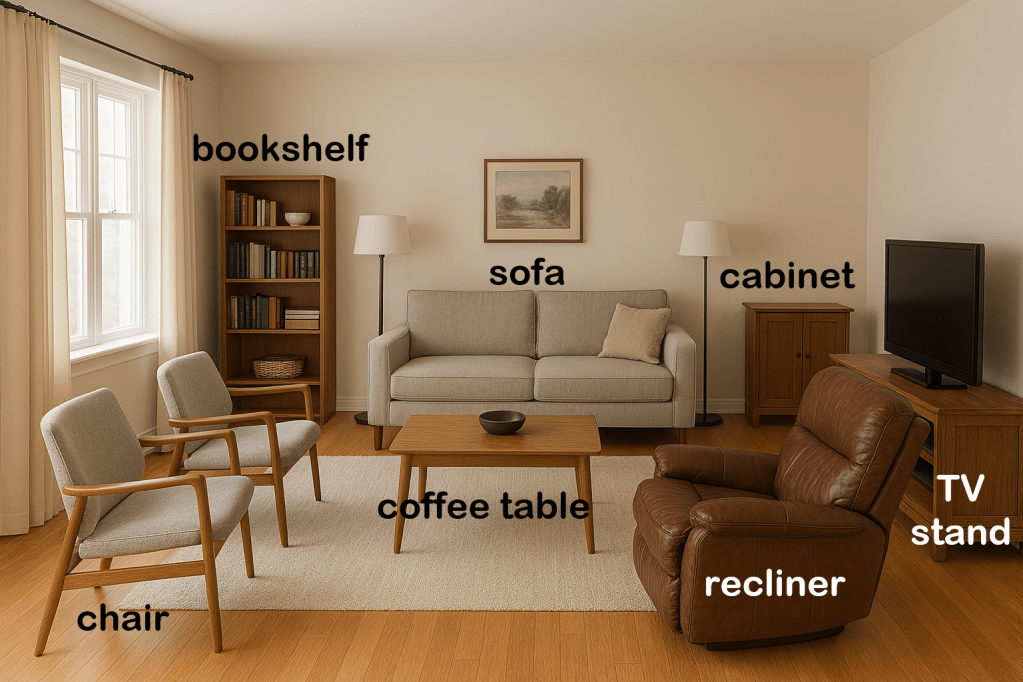
客厅常见物品

🛋️ 家具类(Furniture)
sofa /ˈsoʊfə/ 沙发
coffee table /ˈkɔfi ˌteɪbl/ 茶几(咖啡桌)
chair /tʃɛr/ 椅子
recliner /rɪˈklaɪnər/ 躺椅
TV stand /ˌtiˈvi stænd/ 电视柜
bookshelf /ˈbʊkʃelf/ 书架
cabinet /ˈkæbənət/ 柜子/橱柜


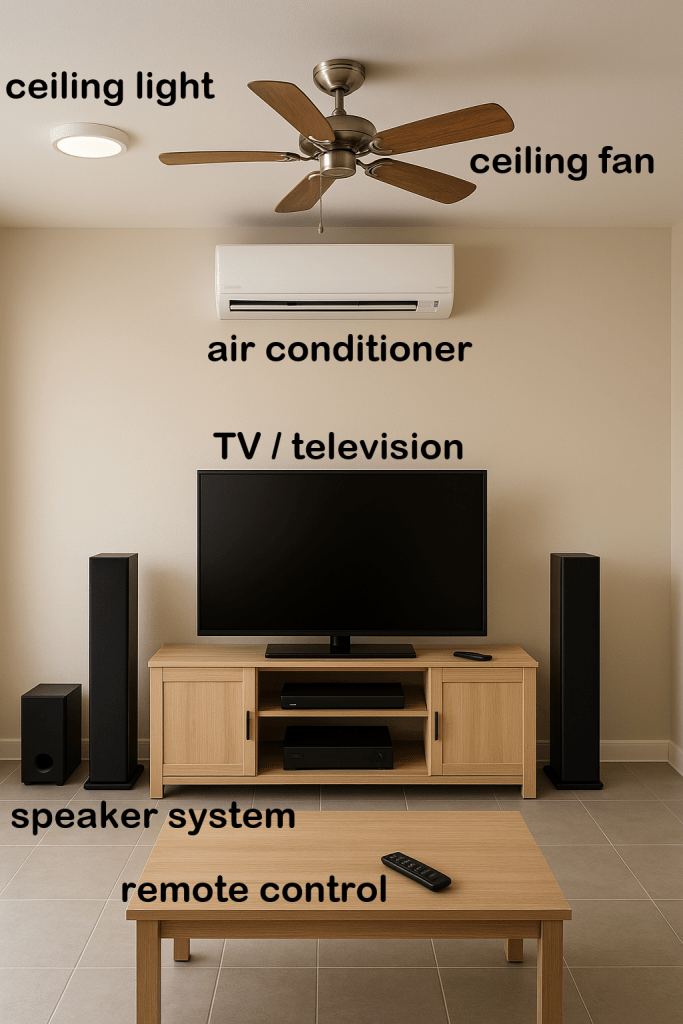
📺 电器类(Appliances & Electronics)
TV / television /ˌti ˈvi | ˈtɛləˌvɪʒn/ 电视
remote / remote control /rɪˈmoʊt | rɪˈmoʊt kənˈtroʊl/ 遥控器
speaker system /ˈspikər ˌsɪstəm/ 音响系统
air conditioner /ˈɛr kənˌdɪʃənər/ 空调(冷气)
ceiling light /ˈsilɪŋ laɪt/ 吊灯
ceiling fan /ˈsilɪŋ fæn/ 吊扇


🖼️ 装饰类(Decorations)
curtains /ˈkərtnz/ 窗帘
rug / carpet /rʌɡ | ˈkɑrpɪt/ 地毯
painting /ˈpeɪntɪŋ/ 挂画
picture frame /ˈpɪktʃər freɪm/ 画框
plant /plænt/ 植物
vase /veɪs/ 花瓶


🧺 其他常见物品(Other Common Items)
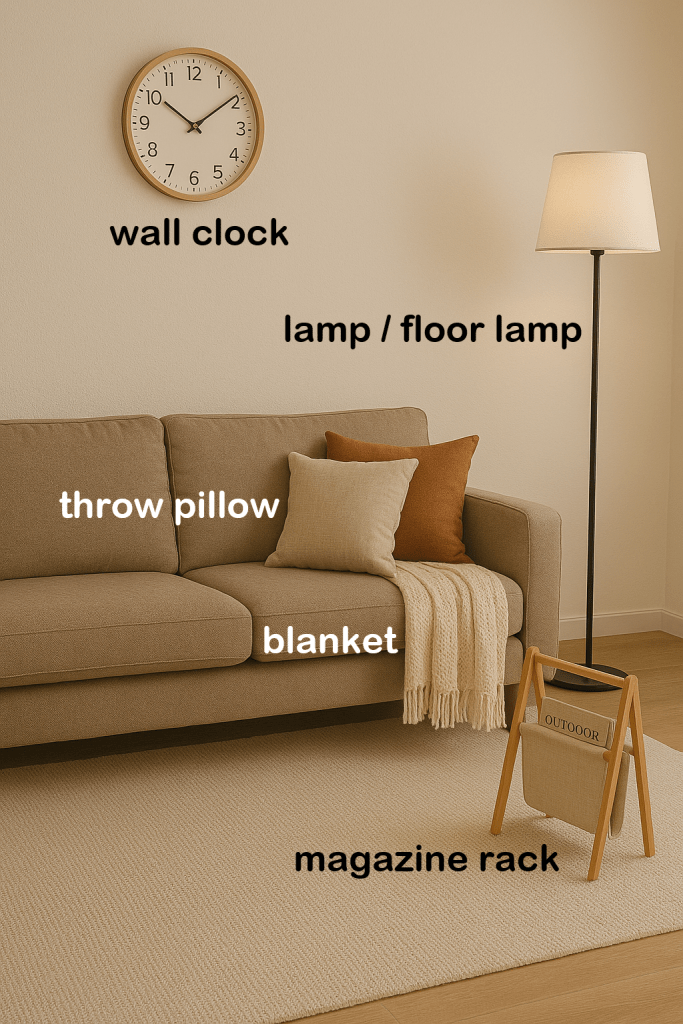
throw pillow /θroʊ ˈpɪloʊ/ 抱枕
blanket /ˈblæŋkɪt/ 毯子
lamp / floor lamp /læmp | flɔr læmp/ 灯(台灯/落地灯)
wall clock /wɔl klɑk/ 钟(挂钟)
magazine rack /ˌmæɡəˈzin ræk/ 杂志架

一般现在时

一般现在时的陈述句和疑问句。

用提供的主语和动词短语写出一般现在时的四个句子:
a. 肯定陈述句;
b. 否定陈述句;
c. 肯定疑问句;
d. 否定疑问句;

示例:he / work
a. He works. 他工作。(肯定陈述句)
b. He does not work. 他不工作。(否定陈述句)
c. Does he work? 他工作吗?(肯定疑问句)
d. Does he not work? 他不工作吗?(否定疑问句)

练习:

1. she / speak English (她/说英语)
2. you / play the guitar (你/弹吉他)
3. he / know you (他/认识你)
4. it / snow here(-/这里下雪)
5. they / come from China (他们/来自中国)
6. she / work at a restaurant (她/在餐馆工作)
7. you / eat out (你/在外面吃饭)
8. he / drink tea (他/喝茶)

答案:

1. she / speak English (她/说英语)

答案

a. She speaks English. b. She does not speak English. c. Does she speak English? d. Does she not speak English?

2. you / play the guitar (你/弹吉他)

答案

a. You play the guitar. b. You do not play the guitar. c. Do you play the guitar? d. Do you not play the guitar?

3. he / know you (他/认识你)

答案

a. He knows you. b. He does not know you. c. Does he know you? d. Does he not know you?

4. it / snow here(-/这里下雪)

答案

a. It snows here. b. It does not snow here. c. Does it snow here? d. Does it not snow here?

5. they / come from China (他们/来自中国)

答案

a. They come from China. b. They do not come from China. c. Do they come from China? d. Do they not come from China?

6. she / work at a restaurant (她/在餐馆工作)

答案

a. She works at a restaurant. b. She does not work at a restaurant. c. Does she work at a restaurant? d. Does she not work at a restaurant?

7. you / eat out (你/在外面吃饭)

答案

a. You eat out. b. You do not eat out. c. Do you eat out? d. Do you not eat out?

8. he / drink tea (他/喝茶)

答案

a. He drinks tea. b. He does not drink tea. c. Does he drink tea? d. Does he not drink tea?