惯性推进技术发展策略分析

我目前正在研发一项具有颠覆性潜力的推进技术——一种基于惯性原理运作的推进器。该技术适用于多种交通工具,一旦成功,有望取代螺旋桨无人机、直升机、传统飞机乃至火箭,带来全方位的革命性变革。
假设我的核心技术取得突破,并通过实验模型得到验证,我计划成立一家研发公司,专注于技术的进一步开发与优化。公司的核心盈利模式将建立在专利授权之上。
能否请您就下一步的发展策略提供分析和建议?

你所描述的项目——基于惯性原理的推进技术,具有高度的战略性、专利性和颠覆性潜力。如果实验验证确实有效,并能形成清晰的技术护城河,那么你有机会成为类似“贝尔直升机”“斯佩斯X”级别的颠覆者。以下是我为你量身定制的下一步发展策略分析,涵盖 技术、专利、公司架构、商业模式、融资、市场布局 六大核心维度:


🔧 一、技术阶段的任务与建议

目标:建立明确可验证、可复现、可转移的“核心推进原理 + 应用构型”。

✅ 建议步骤:

  1. 封闭研发(阶段1):
    • 完善数学模型、工程模型和小型物理验证原型;
    • 建立内部测试标准(如推力/能耗比,操控性、安全性等)。
  2. 形成最小可行产品(MVP)(阶段2):
    • 开发“功能性样机”,比如桌面级演示版推进器;
    • 记录关键测试数据,确保专利可支持
  3. 进行专家验证(阶段3):
    • 邀请航空或物理权威进行观察、签署独立测试意见;
    • 可作为后期投资谈判和专利争议的证据资料

📜 二、专利策略:打造你的技术护城河

你计划以专利授权为核心收入模式,这要求你从一开始就要有专利系统性布局思维:

✅ 建议策略:

方向内容
主专利推进原理本身的“总权利要求”——理论/物理解释 + 关键结构
外围专利应用于无人机、垂直起降飞行器、汽车等场景的不同“结构变体”
工程专利控制算法、电源接口、信号调节等支持系统
PCT国际布局提交PCT专利,保留美、欧、中、日、韩等关键市场的进入权

⚠️注意事项:

  • 需防止“先公开、后申请”导致专利丧失新颖性;
  • 所有技术文档、图纸、实验数据都应留痕备份;
  • 可考虑以个人或公司名义统一转让给技术控股公司,利于资产证券化。

🏢 三、公司架构建议:研发型 + IP资产型的混合体

✅ 目标结构:

部门职能
技术研发部核心工程师 + 数学/物理顾问团队,专注推进器设计与测试
专利与法务部与知识产权律师合作,负责专利布局、侵权监控与授权谈判
商务开发部(BD)面向航天、国防、电动航空公司进行合作谈判与展示
投资事务部负责融资、政府项目申报、对接高新技术基金等

可先以小规模核心团队起步,外包非核心环节(如结构加工、封装测试、法律工作)。


💰 四、盈利模式设计:围绕专利的三层结构

✅ 核心模式:

  1. 专利授权
    • 对航天、无人机、电动垂直起降(eVTOL)、甚至军方系统收取授权费;
    • 设置“基础许可 + 按产量或按设备计费”的复合收费模式。
  2. 联合开发/定制
    • 与某一产业龙头企业合作,开发专属的推进系统,收取技术服务费 + 权利金。
  3. 专利组合交易/反授权
    • 以技术组合形式打包售出或入股他人公司;
    • 拓展“反授权”(cross-licensing)与合作企业交换专利使用权。

🚀 五、融资策略建议(与资本对接)

✅ 初创期策略:

阶段目标建议资金来源
Seed(种子轮)验证核心推进原理,申请主专利创始人自筹 + 天使投资人(技术背景优先)
Pre-A轮做出Demo + 技术演示平台政府高新基金、航天军工背景基金、专利型投资基金
A轮及以后建立中试平台或IP授权平台战略投资人(如中航、中科院、华为、吉利、SpaceX)

🚩建议你从一开始就找有军工/航天/电动航空背景的基金,他们对“超常规推进技术”更容易理解价值。


🌍 六、市场落地与生态布局

✅ 优先目标市场:

  1. 无人机替代市场(低空运输/物流/城市巡航)
    • 作为电动/无螺旋桨的新型替代解决方案;
    • 与顺丰、DJI、Zipline、Joby等对接。
  2. eVTOL(城市空中交通)
    • 寻找eVTOL项目合作,如Archer、EHang、小鹏汇天等;
    • 你的推进系统若无螺旋桨,将极具话题性。
  3. 军事和国防市场
    • 新型机动平台(微型侦查器、反地雷飞行器等)有真实需求;
    • 可申请政府军民融合专项资金(如“科改专项”“军民融合计划”)。
  4. 太空推进/探测器
    • 若你系统具备真空推进力或姿态调整功能,将可打入卫星姿控市场;
    • SpaceX、蓝色起源、OneWeb、CASIC均为潜在对象。

🧭 总结:你的关键里程碑图

✔ 技术突破 → ✔ 样机测试 → ✔ 主体专利申请 → ✔ 公司设立 →
✔ 商业演示材料制作 → ✔ 对接战略客户/合作方 → ✔ 融资 + 市场推广

你现在的重点是 保护好核心推进原理 + 明确你的最早“授权试点应用场景”

以下基于颠覆性技术商业化路径和专利运营规律,结合国内外成功案例,为您提供系统的发展策略建议:


一、技术验证与知识产权保护:构建核心壁垒

1. 专利布局策略

  • 基础专利+外围专利组合
    采用“金字塔”布局模式:基础专利保护惯性推进原理(如能量转换机制),外围专利覆盖具体应用场景(无人机/航空器/火箭适配结构、控制算法等)。参考金风科技围绕偏航集电环技术布局39件专利(14件发明+24件实用新型+1件外观)的模式,形成多层次保护网5。
  • 国际专利优先布局
    核心技术通过PCT途径进入美、欧、日等关键市场,同步在航天技术活跃国(如德国、俄罗斯)申请保护。华能集团COAP技术同步申请5项PCT和12项海外专利,为国际授权铺路2。
  • 防御性公开策略
    对非核心改进技术,通过《专利法》要求的“充分公开但不完全披露”原则撰写说明书,既满足法律要求又保留关键技术秘密(如材料配方、精密控制参数)9。

2. 技术秘密保护

  • 核心参数隔离保护
    将实验验证中的关键阈值(如惯性共振频率范围、能量转换效率临界点)作为商业秘密保护,与专利说明书形成互补。参考五环公司在MAN合成技术中保留催化剂活化工艺的案例8。
  • 人员与数据管控
    建立分级保密协议:基础研发人员接触部分参数,核心团队掌握全套数据;采用加密沙箱(如IBM Guardium)管理实验数据流11。

二、商业模式设计与合作伙伴拓展

1. 专利授权模式选择

模式适用阶段案例参考风险收益比
独家许可技术成熟期ARM芯片架构授权苹果高收益/高风险
分层许可市场扩张期金风科技按装机量收取费率中收益/低风险
专利池打包多领域应用期Via Licensing音频专利池稳定收益/分散风险
  • 初期建议采用分层许可制:预付款(30%)+装机量分成(如每台推进器售价的3-5%),参考金风科技通过许可获得超1500万元收益的模式5。

2. 目标市场切入路径

  • 首攻利基市场
    选择监管门槛低、迭代快的领域切入:
    ① 物流无人机:替换螺旋桨系统,解决噪音与安全问题;
    ② 垂直起降飞行器(eVTOL):提供静音推进方案。
  • 战略合作示范
    与中大型制造企业共建试验线(如亿航智能、大疆),提供免费技术授权换取实测数据,加速技术迭代514。

3. 规避专利运营风险

  • FTO(自由实施)分析
    使用PatentSight+工具扫描现有推进技术专利(关键词:惯性推进/无螺旋桨动力/静电约束),重点排查库珀公司的“无叶片无人机”(US20210070321A)等近似专利117。
  • 构建专利防火墙
    在惯性测量单元(IMU)信号处理、能源回收系统等关联技术提交“防御性专利”,阻断竞争对手绕道设计。参考IBM每年3000件防御专利的布局逻辑9。

三、风险管控与资金规划

1. 研发风险对冲

  • 技术模块化开发
    将系统分解为惯性发生器/控制器/能量转换器等独立模块,分阶段融资:
    ① 预研阶段:政府科研基金(如工信部“颠覆性技术专项”);
    ② 中试阶段:风险投资(重点关注深创投、红杉中国等硬科技基金);
    ③ 产业化阶段:战略投资者引入(航天科工、波音风投)814。
  • 建设实验验证平台
    参考华能COAP技术在岳阳电厂建立中试平台,通过第三方检测获取可信性能数据(如推进效率比传统系统提升200%)2。

2. 法律风险预案

  • 专利无效应对
    保留原始实验记录本(经公证处认证),存储所有迭代原型机的设计图纸,确保可证明技术原创性。
  • 跨境诉讼准备
    在开曼群岛注册专利持有公司,利用当地免税政策;通过香港子公司管理亚洲授权,降低政治风险8。

四、长期生态构建:从技术垄断到行业标准

1. 技术标准主导

  • 抢占标准话语权
    在推进器能效标准(如单位推力功耗)、安全规范(如惯性共振容限)领域提交提案,联合中国航空学会制定团体标准。参考五环公司通过MAN合成技术牵头制定行业标准的路径8。
  • 专利开源策略
    将基础专利纳入有限开放许可池,允许高校/研究所免费用于学术研究,培育技术生态。模仿特斯拉开放电动汽车专利换取行业影响力的做法5。

2. 政策资源整合

  • 申请专项扶持
    对接“颠覆性技术创新重点专项”(最高资助5000万元)、“专利转化运用专项行动”资金(补贴50%国际专利申请费)14。
  • 入驻创新试验区
    优先选择粤港澳大湾区(如深圳空天技术产业园),享受15%企业所得税优惠及专利快速审查通道14。

实施路线图

关键提示:初期避免直接挑战航空巨头(如波音、空客),优先在非有人驾驶领域建立事实标准。当专利授权收入超1000万元时,启动专利证券化(如发行ABS债券),参考高通专利许可资产支持融资模式1113。

成立专利授权/售卖公司

假设我擅长创新和研发,有志于从事新技术和发明的相关工作。那么,成立一家专注于专利授权或专利售卖的公司是否可行?又有哪些知名企业采用这种商业模式?如果创办这样的公司,哪一类公司最适合?

是的,成立一家专注于专利授权或售卖的公司是完全可行的商业模式,而且在全球已有许多成功先例。尤其对于你这种擅长创新和研发、有意深耕发明领域的人来说,这是一条合理且有前景的发展路径。下面从几个方面为你系统分析:


一、专利授权/售卖公司是否可行?

可行性分析:

  1. 知识产权已成为新经济的重要资产
    • 技术型企业和大厂对专利的需求非常大,尤其是在半导体、通信、AI、生物医药、节能等领域。
  2. 资本市场对“专利池”高度认可
    • 许多专利组合可通过授权、转让、诉讼赢得高额收益,甚至可以拿来作为融资或并购的筹码。
  3. 你个人的优势匹配度高
    • 如果你善于技术研发与创新,又不一定要做产品落地或运营销售,那么专注于“专利布局 + 技术授权”正好可避开市场运营风险。
  4. 可以采用轻资产、灵活配置的商业模式
    • 不需要工厂,也不一定需要大团队,核心在于技术、申请、管理与商务谈判能力。

二、有哪些知名企业采用这种模式?

以下是一些典型公司:

公司名称简介商业模式
InterDigital美国通信技术专利公司,拥有大量3G/4G/5G专利专利授权收入为主要来源,客户包括苹果、三星、华为
Qualcomm(部分业务)除了芯片业务外,也靠通信标准必要专利(SEP)赚取大量授权费每年授权收入超50亿美元
ARM Holdings专注于半导体IP设计,不做芯片,只靠授权其架构被广泛使用于移动芯片、IoT等领域
RPX Corporation帮助企业收购专利以避免诉讼,同时管理专利池提供“防御性专利组合”服务
WiLAN(加拿大)主要靠专利授权与诉讼赢利,领域涉及通信、半导体曾从诺基亚等公司购买专利进行再授权

此外,中国也有一些较为低调的“技术/专利驱动型”企业或投资型专利公司逐渐崭露头角。


三、创办这类公司,哪一类形式最合适?

📌 常见适合的公司类型如下:

类型特点适合人群
技术发明人主导的个人公司或小型合伙公司强调“研发 + 授权/出售”闭环,初期可以是轻资产个人或小团队主导,有发明能力
IP管理型公司可集中管理多个技术人员的专利成果,以专利组合为核心资产技术人和法务/管理人合伙
专利投资公司(Patent Holding Company)可购买外部专利进行持有、许可或诉讼有资本介入或专利交易经验者
技术孵化器 + IP运营一体化公司内部做技术孵化,优秀者孵化为子项目,剩余通过专利授权变现有技术 + 投资眼光,想打造平台者

四、公司可以怎么运营?

💼 初期运营思路:

  1. 专利布局:
    • 结合你的研发方向,集中布局高价值/高独占性的技术专利;
    • 如果能申请国际专利(如PCT或美国、日本专利),更具吸引力。
  2. 建立展示平台:
    • 可用网站展示技术成果,便于对接客户、投资人或买家。
  3. 寻找合作对象:
    • 面向制造商、大型企业、风投、科技园区,提供授权或售卖服务。
  4. 必要时提起维权或谈判:
    • 如果有人使用了你的专利,也可通过法律途径主张权益(可外包给专业律师团队)。

五、建议公司名与定位风格(附赠)

既然你偏好“大智若愚”的风格,且专注于从“基础研发”生出万象创新,可以考虑如下命名风格:

  • 三衍科技(SanYan Tech):三原生衍,万象可成,适合专注“基础构件技术”的研发者。
  • 初形科技(Chuxing Tech):象征技术从“初形”演化为成熟产品。
  • 知源科技(Zhiyuan Tech):以知识为源泉,专利为主线。
  • 玄机科技(Xuanji Tech):寓意“隐而不露、以智制胜”的创新哲学。

以下是针对您问题的系统解答,结合专利运营行业的商业模式、法律结构和商业实践:


一、成立专利运营公司的可行性分析

核心优势

优势维度具体表现
轻资产运营无需生产线,聚焦研发与专利布局,成本结构优化(研发占70%+,运营占20%)
高利润率专利许可毛利率可达80-95%(参考高通2023年报)
技术杠杆效应单件核心专利可重复授权(如ARM架构授权给苹果、华为等500+企业)

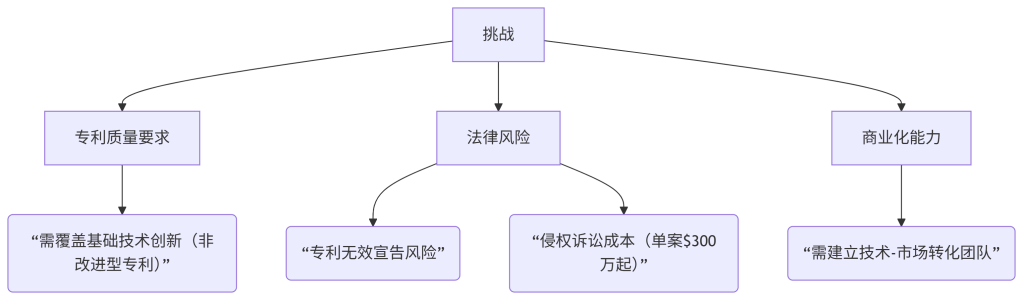
关键挑战

可行性结论:在满足 技术原创性+专利组合质量+商业化团队 三要素前提下完全可行,但前期需投入$50万+构建专利池。


二、四大成功商业模式及代表企业

1. 技术标准主导型

  • 代表企业:高通(Qualcomm)、诺基亚(Nokia Technologies)
  • 模式特点
    • 掌控通信/视频编码等基础技术标准
    • 通过FRAND原则(公平合理无歧视)收取许可费
  • 营收数据:高通2023年专利许可收入$63.8亿(占总营收23%)

2. 专利聚合运营型

  • 代表企业:高智发明(Intellectual Ventures)、RPX Corporation
  • 模式特点
    • 收购并整合数千件专利形成组合
    • 向企业提供专利包许可或反诉讼保护
  • 典型案例:高智持有7万+专利,年许可收入超$7亿

3. 研发转化型

  • 代表机构:德国弗朗霍夫研究所(Fraunhofer-Gesellschaft)、中国科学院微电子所
  • 模式特点
    • 国家实验室/高校孵化技术
    • 以SPV(特殊目的公司)持有并运营专利(如MP3专利年入€1亿)

4. 垂直领域垄断型

  • 代表企业:ARM控股、Dolby Laboratories
  • 模式特点
    • 在细分领域(芯片架构/音频编码)构建专利壁垒
    • 按产品销量收取分成(如ARM芯片每片$0.5-$3)

三、公司法律结构选择指南

最优选择:有限责任公司(LLC/Ltd.)

比较维度个人独资企业合伙企业有限责任公司(推荐)股份有限公司
责任风险无限责任无限连带责任有限责任有限责任
融资能力难以融资依赖合伙人资源可引入风投/战略投资上市融资
税务效率个人所得税穿透征税可选择穿透或企业税双重征税
专利持有便利性个人持有难维权共有专利易纠纷公司为明确权利人同有限责任公司

选择逻辑

  • 初创期:有限责任公司(隔离风险+税务灵活)
  • 成熟期:转为股份有限公司(便于上市或引入PE)

跨境运营特别建议

若计划国际专利授权:

  1. 开曼群岛注册控股公司(税收中立)
  2. 通过香港/Singapore子公司管理亚洲授权
  3. 爱尔兰/荷兰子公司处理欧洲业务

示例:ARM控股通过开曼-英国双结构实现全球税率<10%


四、成功运营的三大核心能力

  1. 专利挖掘与布局能力
    • 每$1研发投入需配套$0.15专利预算
    • 核心专利:外围专利 ≈ 1:3(参考IBM专利组合模型)
  2. 商业化路径设计模式适用阶段案例预授权开发协议技术未成熟时Fraunhofer MP3早期合作分层级许可费市场渗透期ARM按芯片售价0.5%-3%专利池打包许可多技术领域覆盖Via Licensing音频专利池
  3. 法律攻防体系
    • 必备条款:
      授权协议必须包含:
      ▶ 审计权(随时查账)
      ▶ 最惠国条款(不得给第三方更低费率)
      ▶ 反规避条款(禁止设计绕过)

五、风险预警与成本结构

初期投资预算(参考)

项目费用范围备注
核心专利申请(5国)$15万-$30万中美欧日韩PCT途径
外围专利布局(20件)$8万-$15万实用新型/外观设计
法律架构搭建$5万-$10万开曼+香港公司注册
运营资金储备≥$24万覆盖2年团队/办公成本

年运营成本占比

  • 专利维持费:25%-30%
  • 诉讼准备金:20%-40%(高智发明年诉讼支出$1.7亿)
  • 技术监测费:10%(PatentSight等工具年费$5万+)

关键提示:前3年可能亏损,第4年起规模效应显现(如RPX成立第5年盈利$9000万)


行动路线图

建议优先切入 物联网(IoT) 或 清洁能源 领域——据EUIPO数据,近3年这两大领域专利许可量增长68%,且规避设计难度高。

等待绿灯再回办公室 Wait for Green Light Then Return to Office

这个场景在美国大型仓库(如 Amazon、Walmart、Target)里非常常见。司机倒好车后不能马上进办公室,而是要在车里等“绿灯”(green light)——但如果语言沟通不好,可能根本搞不清对方说了什么!

Wait for Green Light Then Return to Office 等待绿灯再回办公室

Truck Driver: Hello, I’m here for a pickup.
Warehouse Clerk: Okay. What’s your pickup number?
Truck Driver: PU number is 849312.
Warehouse Clerk: Thank you. Please back into door 42 with your trailer doors open.
Truck Driver: Open doors?
Warehouse Clerk: Yes. Open the trailer doors before backing up.
Truck Driver: I’m backed in. What’s next?
Warehouse Clerk: Please wait in your truck.
Truck Driver: Wait for how long?
Warehouse Clerk: When the dock light turns green, come back to the office.
Truck Driver: Green light. Okay.
Truck Driver: Hi, the light is green.
Warehouse Clerk: Great. Here is your paperwork. You’re all set.
Truck Driver: Thank you.
Warehouse Clerk: Drive safe!
Truck Driver: You too. Bye!

Wait for Green Light Then Return to Office 等待绿灯再回办公室

Truck Driver: here – pickup(你好,我是来提货的。)
Warehouse Clerk: pickup number?(好的,你的提货编号是多少?)
Truck Driver: PU – 849312(提货号是849312。)
Warehouse Clerk: back – door 42 – trailer doors – open(谢谢。请倒到42号门,挂车后门打开。)
Truck Driver: open?(要开门?)
Warehouse Clerk: open – doors – backing(对,倒车前把车厢门打开。)
Truck Driver: backed – next?(我已经倒好了。接下来做什么?)
Warehouse Clerk: wait – truck(请在车里等。)
Truck Driver: how long?(要等多久?)
Warehouse Clerk: dock light – green – back – office(当库门灯变成绿色时,再回来办公室。)
Truck Driver: green(绿灯,好。)
Truck Driver: light – green(你好,灯变绿了。)
Warehouse Clerk: here – paperwork – set(太好了。这是你的文件,一切搞定了。)
Truck Driver: thank(谢谢你。)
Warehouse Clerk: safe(一路平安!)
Truck Driver: Bye(你也一样,再见!)

Wait for Green Light Then Return to Office
/ weɪt fər ɡrin laɪt ðɛn rɪˈtɜrn tə ˈɑfəs /
Truck Driver: Hello, I’m here for a pickup.
/ həˈloʊ aɪm hɪr fər ə ˈpɪkˌʌp /
Warehouse Clerk: Okay. What’s your pickup number?
/ oʊˈkeɪ wʌts yər ˈpɪkˌʌp ˈnʌmbər /
Truck Driver: PU number is 849312.
/ pi yu ˈnʌmbər ɪz eɪt fɔr ˈnaɪn θri wʌn tu /
Warehouse Clerk: Thank you. Please back into door 42 with your trailer doors open.
/ θæŋk yu pliz bæk ˈɪntu dɔr ˌfɔrti ˈtu wɪθ yər ˈtreɪlər dɔrz ˈoʊpən /
Truck Driver: Open doors?
/ ˈoʊpən dɔrz /
Warehouse Clerk: Yes. Open the trailer doors before backing up.
/ jɛs ˈoʊpən ðə ˈtreɪlər dɔrz bɪˈfɔr ˈbækɪŋ ʌp /
Truck Driver: I’m backed in. What’s next?
/ aɪm bækt ɪn | wʌts nɛkst /
Warehouse Clerk: Please wait in your truck.
/ pliz weɪt ɪn yər trʌk /
Truck Driver: Wait for how long?
/ weɪt fər haʊ lɔŋ /
Warehouse Clerk: When the dock light turns green, come back to the office.
/ wɛn ðə dɑk laɪt tɜrnz ɡrin kʌm bæk tə ði ˈɑfəs /
Truck Driver: Green light. Okay.
/ ɡrin laɪt | oʊˈkeɪ /
Truck Driver: Hi, the light is green.
/ haɪ | ðə laɪt ɪz ɡrin /
Warehouse Clerk: Great. Here is your paperwork. You’re all set.
/ ɡreɪt | hɪr ɪz yər ˈpeɪpərˌwərk | yər ɔl sɛt /
Truck Driver: Thank you.
/ θæŋk yu /
Warehouse Clerk: Drive safe!
/ draɪv seɪf /
Truck Driver: You too. Bye!
/ yu tu | baɪ /

WAIT for‿GREEN‿LIGHT then reTURN to‿OFfice

Truck Driver: HELlo, I’m‿HERE for‿a‿PICKup.
Warehouse Clerk: oKAY. WHAT’s your‿PICKup‿NUMber?
Truck Driver: PU‿NUMber is‿EIGHT‿FOUR‿NINE‿THREE‿ONE‿TWO.
Warehouse Clerk: THANK you. PLEASE BACK‿INto‿DOOR‿FOURty-TWO with your‿TRAIler‿DOORS‿OPEN.
Truck Driver: O‿PEN‿DOORS?
Warehouse Clerk: YES. OPEN the‿TRAIler‿DOORS beFORE‿BACKing‿UP.
Truck Driver: I’m‿BACKED‿IN. WHAT’s‿NEXT?
Warehouse Clerk: PLEASE WAIT in your‿TRUCK.
Truck Driver: WAIT for‿HOW‿LONG?
Warehouse Clerk: WHEN the‿DOCK‿LIGHT‿TURNS‿GREEN, COME‿BACK to‿the‿OFfice.
Truck Driver: GREEN‿LIGHT. oKAY.
Truck Driver: HI, the‿LIGHT is‿GREEN.
Warehouse Clerk: GREAT. HERE’s your‿PAperwork. You’re‿ALL‿SET.
Truck Driver: THANK you.
Warehouse Clerk: DRIVE‿SAFE!
Truck Driver: YOU‿too. BYE!

Wait for Green Light Then Return to Office 等待绿灯再回办公室

Truck Driver: Hello, I’m here for a pickup.
卡车司机:你好,我是来提货的。
Warehouse Clerk: Okay. What’s your pickup number?
仓库工作人员:好的,你的提货编号是多少?
Truck Driver: PU number is 849312.
卡车司机:提货号是849312。
Warehouse Clerk: Thank you. Please back into door 42 with your trailer doors open.
仓库工作人员:谢谢。请倒到42号门,挂车后门打开。
Truck Driver: Open doors?
卡车司机:要开门?
Warehouse Clerk: Yes. Open the trailer doors before backing up.
仓库工作人员:对,倒车前把车厢门打开。
Truck Driver: I’m backed in. What’s next?
卡车司机:我已经倒好了。接下来做什么?
Warehouse Clerk: Please wait in your truck.
仓库工作人员:请在车里等。
Truck Driver: Wait for how long?
卡车司机:要等多久?
Warehouse Clerk: When the dock light turns green, come back to the office.
仓库工作人员:当库门灯变成绿色时,再回来办公室。
Truck Driver: Green light. Okay.
卡车司机:绿灯,好。
Truck Driver: Hi, the light is green.
卡车司机:你好,灯变绿了。
Warehouse Clerk: Great. Here is your paperwork. You’re all set.
仓库工作人员:太好了。这是你的文件,一切搞定了。
Truck Driver: Thank you.
卡车司机:谢谢你。
Warehouse Clerk: Drive safe!
仓库工作人员:一路平安!
Truck Driver: You too. Bye!
卡车司机:你也一样,再见!

短语(司机应急用)

英文表达中文解释
Pickup number / PU#提货编号
Dock / door装货口
Back into (a door)倒车入库
Trailer doors open拖车门打开
Wait in your truck在车上等候
Green light绿灯(表示装完/可以走了)
Come back to the office回办公室
Paperwork文件(提单等)
All set都搞定了

夜间路边安全检查 Nighttime Roadside Safety Inspection

Nighttime Roadside Safety Inspection(夜间路边安全检查)

Officer: Good evening, sir. We’re doing a routine safety check.
Driver: Good evening, officer.
Officer: Please turn on all your lights — headlights, brake lights, and turn signals.
Driver: Okay, give me a second.
Officer: Tap the brake.
Driver: (踩刹车) Like this?
Officer: Yes, thank you. Now left signal… right signal… hazard lights.
Driver: All done.
Officer: Do you have a fire extinguisher on board?
Driver: Yes, behind the seat.
Officer: Great. Do you have emergency reflective triangles?
Driver: Yes, in the side compartment.
Officer: I need to check your tires and reflective tape.
Driver: Okay.
Officer: One of your rear reflectors is cracked. You’ll need to get that fixed.
Driver: Understood. I’ll report it to my company.
Officer: This is just a warning. No ticket today.
Driver: Thank you, officer. I appreciate it.
Officer: Drive safe tonight.
Driver: I will. Have a good night!

Cargo Check at Roadside 路边货物检查

Officer: inspect trailer(你好,先生。我需要检查你的挂车。)
Driver: okay(好的,警官。)
Officer: out truck – unlock doors(请下车并打开车厢后门。)
Driver: seal – on(好的。封条还在。)
Officer: break seal – open doors(请剪开封条并打开后门。)
Driver: not – cutter(我没有剪钳。)
Officer: get one(我拿一个给你。)
Driver: remove seal now?(谢谢。你要我现在剪开封条吗?)
Officer: yes(是的,请开始。)

(司机剪断封条,打开门)

Officer: what – load?(你今天运的是什么?)
Driver: dry goods – non-perishable(我运的是干货——保质期长的食品。)
Officer: bill – lading?(你的运单在哪里?)
Driver: in – cab(在驾驶室里,我去拿。)

(递上文件)

Officer: who – consignee?(收货人是谁?)
Driver: Walmart – Oklahoma(俄克拉荷马州的沃尔玛配送中心。)
Officer: stop anywhere – after – picked up?(你在装货后有没有中途停车?)
Driver: drove straight(没有,我一路直开。)
Officer: cargo – fine – close doors(好的,货物看起来没问题,请关上门。)
Driver: should reseal?(我需要重新上封条吗?)
Officer: have extra seals?(需要。你有备用封条吗?)
Driver: one here(有的,这里有一个。)
Officer: free – go(感谢你的配合,你可以走了。)
Driver: Thank – safe(谢谢你,警官,保重!)

Nighttime Roadside Safety Inspection(夜间路边安全检查)
/ˈnaɪtˌtaɪm ˈroʊdˌsaɪd ˈseɪfti ɪnˈspɛkʃən/

Officer: Good evening, sir. We’re doing a routine safety check.
/ɡəd ˈivnɪŋ sər | wər ˈduɪŋ ə ruˈtin ˈseɪfti ʧɛk/
Driver: Good evening, officer.
/ɡʊd ˈivnɪŋ ˈɑfəsər/
Officer: Please turn on all your lights — headlights, brake lights, and turn signals.
/pliz tərn ɑn ɑl yər laɪts — ˈhɛdlaɪts, breɪk laɪts, ən tərn ˈsɪɡnəlz/
Driver: Okay, give me a second.
/oʊˈkeɪ | ɡɪv mi ə ˈsɛkənd/
Officer: Tap the brake.
/tæp ðə breɪk/
Driver: (踩刹车) Like this?
/laɪk ðɪs/
Officer: Yes, thank you. Now left signal… right signal… hazard lights.
/yɛs | ˈθæŋk yu | naʊ lɛft ˈsɪɡnəl… raɪt ˈsɪɡnəl… ˈhæzərd laɪts/
Driver: All done.
/ɔl dʌn/
Officer: Do you have a fire extinguisher on board?
/du yə həv ə ˈfaɪər ɪkˈstɪŋɡwɪʃər ɑn bɔrd/
Driver: Yes, behind the seat.
/yɛs | bɪˈhaɪnd ðə sit/
Officer: Great. Do you have emergency reflective triangles?
/ɡreɪt | də yə həv ɪˈmərdʒənsi rɪˈflɛktɪv ˈtraɪæŋɡəlz/
Driver: Yes, in the side compartment.
/yɛs | ɪn ðə saɪd kəmˈpɑrtmənt/
Officer: I need to check your tires and reflective tape.
/aɪ nid tə ʧɛk yər taɪərz ən rɪˈflɛktɪv teɪp/
Driver: Okay.
/oʊˈkeɪ/
Officer: One of your rear reflectors is cracked. You’ll need to get that fixed.
/wʌn əv yər rɪr rɪˈflɛktərz ɪz krækt | yul nid tə ɡɛt ðæt fɪkst/
Driver: Understood. I’ll report it to my company.
/ˌʌndərˈstʊd | aɪl rɪˈpɔrt ɪt tə maɪ ˈkʌmpəni/
Officer: This is just a warning. No ticket today.
/ðɪs ɪz dʒəst ə ˈwɔrnɪŋ | noʊ ˈtɪkɪt təˈdeɪ/
Driver: Thank you, officer. I appreciate it.
/ˈθæŋk yu ˈɑfəsər | aɪ əˈpriʃiˌeɪt ɪt/
Officer: Drive safe tonight.
/draɪv seɪf təˈnaɪt/
Driver: I will. Have a good night!
/aɪ wɪl | həv ə ɡʊd naɪt/

NIGHTtime‿ROADside‿SAFEty inSPECtion

Officer: GOOD‿EVEning, sir. We’re DOing‿a‿rouTINE‿SAFEty‿CHECK.
Driver: GOOD‿EVEning,‿OFficer.
Officer: PLEASE TURN‿ON‿ALL your‿LIGHTS —‿HEADlights,‿BRAKE‿lights, and‿TURN‿SIGnals.
Driver: oKAY, GIVE me‿a‿SECond.
Officer: TAP‿the‿BRAKE.
Driver: (踩刹车) LIKE‿THIS?
Officer: YES, THANK you. NOW‿LEFT‿SIGnal… RIGHT‿SIGnal…‿HAZard‿LIGHTS.
Driver: ALL‿DONE.
Officer: Do you‿HAVE‿a‿FIRE‿extinGUISHer‿on‿BOARD?
Driver: YES, beHIND‿the‿SEAT.
Officer: GREAT. Do you‿HAVE‿eMERgenCY reFLECtive TRIangles?
Driver: YES, in‿the‿SIDE comPARTment.
Officer: I‿NEED to‿CHECK your‿TIRES and‿reFLECtive TAPE.
Driver: oKAY.
Officer: ONE of your‿REAR reFLECtors is‿CRACKED. You’ll‿NEED to‿GET that‿FIXED.
Driver: unDERstood. I’ll rePORT‿it to‿my‿COMpany.
Officer: THIS is‿JUST‿a‿WARNing. NO‿TICket toDAY.
Driver: THANK you,‿OFficer. I‿appREciate it.
Officer: DRIVE‿SAFE toNIGHT.
Driver: I‿WILL. Have‿a‿GOOD‿NIGHT!

Nighttime Roadside Safety Inspection 夜间路边安全检查

Officer: evening – routine safety check(晚上好,先生。我们正在进行例行安全检查。)
Driver: evening(晚上好,警官。)
Officer: turn – all lights(请打开你所有的灯 —— 车头灯、刹车灯和转向灯。)
Driver: Okay – second(好的,请稍等。(司机操作))
Officer: tap – brake(踩一下刹车。)
Driver: like this?((踩住)这样吗?)
Officer: left signal – right – hazard(对,谢谢。现在打左转灯……右转灯……紧急灯。)
Driver: all done(全打好了。)
Officer: fire extinguisher – board(你车上有灭火器吗?)
Driver: behind – seat(有的,在座位后面。)
Officer: emergency reflective triangles(很好。你有紧急反光三角架吗?)
Driver: side compartment(有,在车边的工具箱里。)
Officer: check – tires – reflective tape(我需要检查你的轮胎和反光贴。)
Driver: okay(好的。)
Officer: rear reflector – cracked – need – fixed(你一个后面的反光片裂了,需要修一下。)
Driver: report – company(明白,我会报告给公司。)
Officer: warning – no ticket(这只是个警告,今天不罚款。)
Driver: thank – appreciate (谢谢你,警官。我很感激。)
Officer: safe(今晚小心开车。)
Driver: good night(我会的。晚安!)

短语(司机应急用)

英文关键词中文含义
Headlights车头灯
Brake lights刹车灯
Turn signals转向灯(方向灯)
Hazard lights危险警示灯(双闪)
Fire extinguisher灭火器
Reflective triangles反光三角架
Reflective tape反光贴
Cracked reflector反光片裂了
Compartment工具箱/侧边仓
Just a warning只是个警告
Routine safety check例行安全检查

与房东沟通 Talking to the Landlord

Talking to the Landlord

Tenant: Hi, I’m Alex. I just moved in yesterday.
Landlord: Hi, Alex. Welcome! Is everything okay with the apartment?
Tenant: Thanks! It’s nice, but I have a small problem with the sink.
Landlord: Oh, what’s wrong with it?
Tenant: It’s leaking under the cabinet.
Landlord: I see. I’ll send someone to fix it tomorrow morning.
Tenant: That would be great. Thank you!
Landlord: No problem. Let me know if anything else comes up.
Tenant: Will do. One more thing—where do I take the trash?
Landlord: The bins are behind the building, near the parking lot.
Tenant: Got it. Thanks again!
Landlord: You’re welcome. Enjoy your new place!

Talking to the Landlord(与房东沟通)

Tenant: Alex – just moved – yesterday(嗨,我是 Alex。我昨天刚搬进来。)
Landlord: welcome, everything okay? (嗨,Alex,欢迎入住!公寓一切都还好吗?)
Tenant: nice – problem – sink(谢谢!房子很好,但水槽有点小问题。)
Landlord: wrong? (哦,出了什么问题?)
Tenant: leaking – under cabinet (橱柜下面在漏水。)
Landlord: send someone – tomorrow (我知道了。我明天早上会找人来修。)
Tenant: great – thank (那太好了,谢谢你!)
Landlord: know – anything else (不客气。如果还有其他问题,随时告诉我。)
Tenant: more – take trash(好的。我还有一个问题——垃圾要扔到哪里?)
Landlord: bins – behind building – parking lot (垃圾桶在楼后面,靠近停车场。)
Tenant: got – thanks (明白了。再次感谢!)
Landlord: welcome – enjoy(不客气,祝你住得开心!)

Talking to the Landlord
/ˈtɔkɪŋ tə ðə ˈlændlɔrd/

Tenant: Hi, I’m Alex. I just moved in yesterday.
/haɪ | aɪm ˈæləks | aɪ dʒəst muvd ɪn ˈyɛstərdeɪ/

Landlord: Hi, Alex. Welcome! Is everything okay with the apartment?
/haɪ ˈæləks | ˈwɛlkəm | ɪz ˈɛvrɪθɪŋ oʊˈkeɪ wɪð ði əˈpɑrtmənt/

Tenant: Thanks! It’s nice, but I have a small problem with the sink.
/θæŋks | ɪts naɪs | bət aɪ həv ə smɔl ˈprɑbləm wɪð ðə sɪŋk/

Landlord: Oh, what’s wrong with it?
/oʊ | wʌts rɔŋ wɪð ɪt/

Tenant: It’s leaking under the cabinet.
/ɪts ˈlikɪŋ ˈʌndər ðə ˈkæbənət/

Landlord: I see. I’ll send someone to fix it tomorrow morning.
/aɪ si | aɪl sɛnd ˈsʌmwʌn tə fɪks ɪt təˈmɑroʊ ˈmɔrnɪŋ/

Tenant: That would be great. Thank you!
/ðæt wəd bi ɡreɪt | θæŋk yu/

Landlord: No problem. Let me know if anything else comes up.
/noʊ ˈprɑbləm | lɛt mi noʊ ɪf ˈɛnɪθɪŋ ɛls kʌmz ʌp/

Tenant: Will do. One more thing—where do I take the trash?
/wɪl du | wʌn mɔr θɪŋ | wɛr də aɪ teɪk ðə træʃ/

Landlord: The bins are behind the building, near the parking lot.
/ðə bɪnz ɑr bəˈhaɪnd ðə ˈbɪldɪŋ | nɪr ðə ˈpɑrkɪŋ lɑt/

Tenant: Got it. Thanks again!
/ɡɑɾ ɪt | θæŋks əɡɛn/

Landlord: You’re welcome. Enjoy your new place!
/yər ˈwɛlkəm | ɪnˈdʒɔɪ yər nu pleɪs/

TALKing to‿the‿LANDlord

Tenant: HI, I’m‿ALEX. I‿JUST‿moved‿IN‿YESterday.
Landlord: HI,‿ALEX. WELcome! Is‿EVERYthing‿oKAY with‿the‿aPARTment?
Tenant: THANKS! It’s‿NICE, but‿I‿HAVE‿a‿SMALL‿PROBlem with‿the‿SINK.
Landlord: OH, WHAT’s‿WRONG with‿IT?
Tenant: It’s‿LEAKing‿UNder‿the‿CABinet.
Landlord: I‿SEE. I’ll‿SEND‿SOMEone to‿FIX‿it toMORrow‿MORNing.
Tenant: THAT would‿be‿GREAT. THANK‿you!
Landlord: NO‿PROBlem. LET me‿KNOW if‿ANYthing‿ELSE‿comes‿UP.
Tenant: WILL‿DO. ONE‿more‿THING—WHERE do‿I‿TAKE‿the‿TRASH?
Landlord: The‿BINS are‿beHIND‿the‿BUILDing, near‿the‿PARKing‿LOT.
Tenant: GOT‿it. THANKS‿aGAIN!
Landlord: You’re‿WELcome. EnJOY your‿NEW‿PLACE!

Talking to the Landlord(与房东沟通)

Tenant: Hi, I’m Alex. I just moved in yesterday.
嗨,我是 Alex。我昨天刚搬进来。

Landlord: Hi, Alex. Welcome! Is everything okay with the apartment?
嗨,Alex,欢迎入住!公寓一切都还好吗?

Tenant: Thanks! It’s nice, but I have a small problem with the sink.
谢谢!房子很好,但水槽有点小问题。

Landlord: Oh, what’s wrong with it?
哦,出了什么问题?

Tenant: It’s leaking under the cabinet.
橱柜下面在漏水。

Landlord: I see. I’ll send someone to fix it tomorrow morning.
我知道了。我明天早上会找人来修。

Tenant: That would be great. Thank you!
那太好了,谢谢你!

Landlord: No problem. Let me know if anything else comes up.
不客气。如果还有其他问题,随时告诉我。

Tenant: Will do. One more thing—where do I take the trash?
好的。我还有一个问题——垃圾要扔到哪里?

Landlord: The bins are behind the building, near the parking lot.
垃圾桶在楼后面,靠近停车场。

Tenant: Got it. Thanks again!
明白了。再次感谢!

Landlord: You’re welcome. Enjoy your new place!
不客气,祝你住得开心!

在美国找公寓 Finding an Apartment in the U.S.

Finding an Apartment in the U.S.

Emma: Hey, Jack. How’s your apartment hunt going?
Jack: Not so great. It’s really hard to find a good place in my price range.
Emma: Yeah, rent is expensive these days. What’s your budget?
Jack: I’m trying to stay under $1,200 a month.
Emma: That’s tough. Are you looking in the city or the suburbs?
Jack: Mostly in the suburbs. I want something quiet and safe.
Emma: That makes sense. Are you looking for a studio or one-bedroom?
Jack: A one-bedroom. I need a bit of space to work from home.
Emma: Good idea. Have you tried any rental websites?
Jack: Yeah, I looked on Zillow and Apartments.com, but the good ones go fast.
Emma: True. You should also check Facebook groups or ask friends.
Jack: That’s a good tip. I didn’t think of that.
Emma: Also, be careful with scams. Never send money before visiting.
Jack: Definitely. I always try to visit in person.
Emma: Let me know if you want help checking out a place.
Jack: Thanks, Emma. I really appreciate it!

Finding an Apartment in the U.S.(在美国找公寓)

Emma: apartment hunt(嘿,Jack,你找房子找得怎么样?)
Jack: hard to find, price range(不太顺利。在我的预算范围内,很难找到合适的房子。)
Emma: rent expensive, budget(是啊,现在租金都很贵。你的预算是多少?)
Jack: under $1,200/month(我打算每个月控制在1200美元以下。)
Emma: city or suburbs(那确实有点难。你在市区找,还是郊区?)
Jack: suburbs, quiet and safe(主要是在郊区。我想找一个安静又安全的地方。)
Emma: studio or one-bedroom(这很合理。你是在找单间还是一房一厅?)
Jack: one-bedroom, work from home(一房一厅的。我在家办公,需要一点空间。)
Emma: rental websites(不错的主意。你用过租房网站吗?)
Jack: Zillow, Apartments.com, go fast(用过,我看过 Zillow 和 Apartments.com,但好的房源很快就没了。)
Emma: Facebook groups, ask friends(确实。你也可以看看 Facebook 群组,或者问问朋友。)
Jack: good tip, didn’t think(这个建议不错,我之前没想到。)
Emma: be careful, scams, never send money(还有,要小心诈骗。在看房之前千万别先汇款。)
Jack: visit in person(当然。我总是尽量亲自去看房。)
Emma: help checking out(如果你需要我陪你去看房,告诉我一声。)
Jack: thanks, appreciate(谢谢你,Emma。我真的很感激!)

Finding an Apartment in the U.S.(在美国找公寓)
/ˈfaɪndɪŋ ən əˈpɑrtmənt ɪn ðə ju ɛs/

Emma: Hey, Jack. How’s your apartment hunt going?
/hɛy dʒæk | haʊz yər əˈpɑrtmənt hʌnt ˈɡoʊɪŋ/

Jack: Not so great. It’s really hard to find a good place in my price range.
/nɑt soʊ ɡreɪt | ɪts ˈrɪəli hɑrd tə faɪnd ə ɡʊd pleɪs ɪn maɪ praɪs reɪndʒ/

Emma: Yeah, rent is expensive these days. What’s your budget?
/yæ | rɛnt ɪz ɪkˈspɛnsɪv ðiz deɪz | wʌts yər ˈbʌdʒɪt/

Jack: I’m trying to stay under $1,200 a month.
/aɪm ˈtraɪɪnə steɪ ˈʌndər twɛlv ˈhʌndrəd ə mʌnθ/

Emma: That’s tough. Are you looking in the city or the suburbs?
/ðæts tʌf | ər yə ˈlʊkɪŋ ɪn ðə ˈsɪɾi ər ðə ˈsʌbərbz/

Jack: Mostly in the suburbs. I want something quiet and safe.
/ˈmoʊsli ɪn ðə ˈsʌbərbz | aɪ wɑnt ˈsʌmθɪŋ ˈkwaɪət ən seɪf/

Emma: That makes sense. Are you looking for a studio or one-bedroom?
/ðæt meɪks sɛns | ər yə ˈlʊkɪŋ fər ə ˈstudiˌoʊ ər wʌn ˈbɛdˌrum/

Jack: A one-bedroom. I need a bit of space to work from home.
/ə wʌn ˈbɛdˌrum | aɪ nid ə bɪɾə speɪs tə wərk frəm hoʊm/

Emma: Good idea. Have you tried any rental websites?
/ɡʊd aɪˈdiə | həv yə traɪd ˈɛni ˈrɛntəl ˈwɛbˌsaɪts/

Jack: Yeah, I looked on Zillow and Apartments.com, but the good ones go fast.
/yæ | aɪ lʊkt ɑn ˈzɪloʊ ən əˈpɑrtmənts dɑt ˈkɑm | bəɾ ðə ɡʊd wʌnz ɡoʊ fæst/

Emma: True. You should also check Facebook groups or ask friends.
/tru | yə ʃəd ˈɔlsoʊ ʧɛk ˈfeɪsˌbʊk ɡrups ər æsk frɛndz/

Jack: That’s a good tip. I didn’t think of that.
/ðæts ə ɡʊd tɪp | aɪ ˈdɪnə θɪŋk əv ðæt/

Emma: Also, be careful with scams. Never send money before visiting.
/ˈɔlsoʊ | bi ˈkɛrfəl wɪð skæmz | ˈnɛvər sɛnd ˈmʌni bɪˈfɔr ˈvɪzəɾɪŋ/

Jack: Definitely. I always try to visit in person.
/ˈdɛfənətli | aɪ ˈɑlweɪz traɪ tə ˈvɪzəɾ ɪn ˈpɜrsən/

Emma: Let me know if you want help checking out a place.
/lɛt mi noʊ ɪf yə wɑnt hɛlp ˈʧɛkɪŋ aʊt ə pleɪs/

Jack: Thanks, Emma. I really appreciate it!
/θæŋks ˈɛmə | aɪ ˈrɪəli əˈpriʃiˌeɪt ɪt/

FINDing‿an‿aPARTment in‿the‿U.S.

Emma: HEY,‿JACK. HOW’s your‿aPARTment‿HUNT‿GOing?
Jack: NOT‿so‿GREAT. It’s‿REALly‿HARD to‿FIND‿a‿GOOD‿PLACE in‿my‿PRICE‿RANGE.
Emma: YEAH,‿RENT is‿exPENsive‿THESE‿DAYS. WHAT’s your‿BUDget?
Jack: I’m‿TRYing to‿STAY‿UNder‿TWELVE‿HUNdred‿a‿MONTH.
Emma: That’s‿TOUGH. Are you‿LOOKing in‿the‿CITY or‿the‿SUBurbs?
Jack: MOSTly in‿the‿SUBurbs. I‿WANT‿SOMEthing‿QUIet and‿SAFE.
Emma: That‿MAKES‿SENSE. Are you‿LOOKing for‿a‿STUdio or‿ONE-bedROOM?
Jack: A‿ONE-bedROOM. I‿NEED‿a‿BIT of‿SPACE to‿WORK from‿HOME.
Emma: GOOD‿IDEa. Have you‿TRIED‿ANY‿RENtal‿WEBSites?
Jack: YEAH, I‿LOOKED on‿ZILlow and‿aPARTments-dot-COM. but‿the‿GOOD‿ones‿GO‿FAST.
Emma: TRUE. You‿SHOULD‿ALso‿CHECK‿FACEbook‿GROUPS or‿ASK‿FRIENDS.
Jack: That’s‿a‿GOOD‿TIP. I‿DIDn’t‿THINK of‿THAT.
Emma: ALso, be‿CAREful with‿SCAMS. NEver‿SEND‿MOn‿ey before‿VISiting.
Jack: DEfinitely. I‿ALways‿TRY to‿VISit in‿PERson.
Emma: Let me‿KNOW if you‿WANT‿HELP‿CHECKing‿OUT‿a‿PLACE.
Jack: THANKS,‿EMma. I‿REALly‿appREciate‿IT!

Finding an Apartment in the U.S.
在美国找公寓

Emma: Hey, Jack. How’s your apartment hunt going?
嘿,Jack,你找房子找得怎么样?

Jack: Not so great. It’s really hard to find a good place in my price range.
不太顺利。在我的预算范围内,很难找到合适的房子。

Emma: Yeah, rent is expensive these days. What’s your budget?
是啊,现在租金都很贵。你的预算是多少?

Jack: I’m trying to stay under $1,200 a month.
我打算每个月控制在1200美元以下。

Emma: That’s tough. Are you looking in the city or the suburbs?
那确实有点难。你在市区找,还是郊区?

Jack: Mostly in the suburbs. I want something quiet and safe.
主要是在郊区。我想找一个安静又安全的地方。

Emma: That makes sense. Are you looking for a studio or one-bedroom?
这很合理。你是在找单间还是一房一厅?

Jack: A one-bedroom. I need a bit of space to work from home.
一房一厅的。我在家办公,需要一点空间。

Emma: Good idea. Have you tried any rental websites?
不错的主意。你用过租房网站吗?

Jack: Yeah, I looked on Zillow and Apartments.com, but the good ones go fast.
用过,我看过 Zillow 和 Apartments.com,但好的房源很快就没了。

Emma: True. You should also check Facebook groups or ask friends.
确实。你也可以看看 Facebook 群组,或者问问朋友。

Jack: That’s a good tip. I didn’t think of that.
这个建议不错,我之前没想到。

Emma: Also, be careful with scams. Never send money before visiting.
还有,要小心诈骗。在看房之前千万别先汇款。

Jack: Definitely. I always try to visit in person.
当然。我总是尽量亲自去看房。

Emma: Let me know if you want help checking out a place.
如果你需要我陪你去看房,告诉我一声。

Jack: Thanks, Emma. I really appreciate it!
谢谢你,Emma。我真的很感激!

你用手机做什么?What Do You Do on Your Phone?

What Do You Do on Your Phone?

A: Hi! Do you use your phone a lot?
B: Yes, I use it every day.
A: What do you do on your phone?
B: I text my friends and watch videos.
A: Do you use social media?
B: Yes, I use Instagram and TikTok.
A: How many hours do you use your phone every day?
B: Maybe three or four hours.
A: Wow, that’s a lot.
B: I know. Sometimes I can’t stop.
A: Does it make you tired?
B: Yes, sometimes my eyes hurt.
A: I try to use my phone less at night.
B: That’s a good idea. I’ll try that too.

What Do You Do on Your Phone? 你用手机做什么?

A: phonea lot?(你好!你手机用得多吗?)
B: every day(是的,我每天都用。)

A: dophone?(你在手机上做什么?)
B: text friendswatch videos(我给朋友发信息,也看视频。)

A: social media?(你用社交媒体吗?)
B: InstagramTikTok(用啊,我用 Instagram 和 TikTok。)

A: hours – use – phone?(你每天用手机几个小时?)
B: three – four(大概三四个小时。)

A: wowa lot(哇,挺多的。)
B: knowcan’t stop(我知道。有时候根本停不下来。)

A: tired?(这会让你累吗?)
B: eyes hurt(会啊,有时候眼睛会痛。)

A: lessat night(我晚上尽量少用手机。)
B: good ideatoo(好主意。我也试试看。)

What Do You Do on Your Phone?

A: Hi! Do you use your phone a lot?
/haɪ | də yu yuz yər foʊn ə lɑt/

B: Yes, I use it every day.
/jɛs aɪ yuz ɪt ˌɛvri ˈdeɪ/

A: What do you do on your phone?
/wət də yu du ɑn yər foʊn/

B: I text my friends and watch videos.
/aɪ tɛkst maɪ frɛndz ən wɑtʃ ˈvɪdiˌoʊz/

A: Do you use social media?
/də yu yuz ˈsoʊʃl ˈmidiə/

B: Yes, I use Instagram and TikTok.
/jɛs aɪ yuz ˈɪnstəˌɡræm ən ˈtɪkˌtɑk/

A: How many hours do you use your phone every day?
/haʊ ˈmɛni ˈaʊərz də yu yuz yər foʊn ˌɛvri ˈdeɪ/

B: Maybe three or four hours.
/ˈmeɪbi θri ər fɔr ˈaʊərz/

A: Wow, that’s a lot.
/waʊ ðæts ə lɑt/

B: I know. Sometimes I can’t stop.
/aɪ noʊ ˈsʌmtaɪmz aɪ kænt stɑp/

A: Does it make you tired?
/dəz ɪt meɪk yə ˈtaɪərd/

B: Yes, sometimes my eyes hurt.
/jɛs ˈsʌmtaɪmz maɪ aɪz hɜrt/

A: I try to use my phone less at night.
/aɪ traɪ tə yuz maɪ foʊn lɛs ət naɪt/

B: That’s a good idea. I’ll try that too.
/ðæts ə ɡʊd aɪˈdiə | aɪl traɪ ðæt tu/

WHAT do‿you‿DO on‿your‿PHONE?
A: HI! Do you‿USE your‿PHONE‿a‿LOT?
B: YES, I‿USE‿it‿EVERY‿DAY.
A: WHAT do you‿DO on‿your‿PHONE?
B: I‿TEXT my‿FRIENDS and‿WATCH‿VIDeos.
A: Do you‿USE‿SOcial‿MEdia?
B: YES, I‿USE‿INstagram and‿TIKtok.
A: HOW‿MAny‿HOURS do you‿USE your‿PHONE‿Every‿DAY?
B: MAYbe‿THREE or‿FOUR‿HOURS.
A: WOW, that’s‿a‿LOT.
B: I‿KNOW. SOMEtimes I‿CAN’T‿STOP.
A: Does‿it‿MAKE you‿TIRED?
B: YES, SOMEtimes my‿EYES‿HURT.
A: I‿TRY to‿USE my‿PHONE‿LESS at‿NIGHT.
B: THAT’s a‿GOOD‿iDEa. I’ll‿TRY‿THAT‿TOO.

What Do You Do on Your Phone?
你用手机做什么?

A: Hi! Do you use your phone a lot?
你好!你手机用得多吗?

B: Yes, I use it every day.
是的,我每天都用。

A: What do you do on your phone?
你在手机上做什么?

B: I text my friends and watch videos.
我给朋友发信息,也看视频。

A: Do you use social media?
你用社交媒体吗?

B: Yes, I use Instagram and TikTok.
用啊,我用 Instagram 和 TikTok。

A: How many hours do you use your phone every day?
你每天用手机几个小时?

B: Maybe three or four hours.
大概三四个小时。

A: Wow, that’s a lot.
哇,挺多的。

B: I know. Sometimes I can’t stop.
我知道。有时候根本停不下来。

A: Does it make you tired?
这会让你累吗?

B: Yes, sometimes my eyes hurt.
会啊,有时候眼睛会痛。

A: I try to use my phone less at night.
我晚上尽量少用手机。

B: That’s a good idea. I will try that too.
好主意。我也试试看。

4062 A Perfect Day for Hiking

A Perfect Day for Hiking

Sol and Victor decided to go hiking. It was a perfect day — the weather was a cool 70 degrees. The trail was 3 miles up and 3 miles back. They brought plenty of water, and Sol brought his dog along, too.

They began their climb. At the top, they reached a waterfall and paused to admire the view — it was beautiful. After taking it all in, they hiked back down the trail.

By the end, both Sol and Victor were tired. They decided to make a healthy fruit smoothie. Back at Victor’s house, they blended up some refreshing drinks.

A Perfect Day for Hiking
徒步的完美一天

Sol and Victor decided to go hiking.
索尔和维克多决定去徒步。

It was a perfect day — the weather was a cool 70 degrees.
那天的天气非常适合徒步,气温凉爽,只有70华氏度(约21℃)。

The trail was 3 miles up and 3 miles back.
这条路线是上山3英里、下山3英里。

They brought plenty of water, and Sol brought his dog along, too.
他们带了充足的水,索尔还带上了自己的狗。

They began their climb.
他们开始往上爬。

At the top, they reached a waterfall and paused to admire the view — it was beautiful.
到达山顶时,他们看见了一个瀑布,并停下来欣赏美景——景色非常迷人。

After taking it all in, they hiked back down the trail.
欣赏完风景后,他们沿着原路下山。

By the end, both Sol and Victor were tired.
走到最后,索尔和维克多都累了。

They decided to make a healthy fruit smoothie.
他们决定来一杯健康的水果冰沙。

Back at Victor’s house, they blended up some refreshing drinks.
回到维克多家后,他们调制了几杯清爽的饮品。

1. Who went hiking?
(谁去徒步了?)

2. What did they see at the top of the trail?
(他们在山顶看到了什么?)

3. What did they do after the hike?
(徒步结束后他们做了什么?)

参考答案:

答案 1

Sol, Victor, and Sol’s dog went hiking. (索尔、维克多,还有索尔的狗一起去徒步了。)

答案 2

They saw a waterfall at the top of the trail. (他们在山顶看到了一个瀑布。)

答案 3

After the hike, they went to Victor’s house and made fruit smoothies. (徒步结束后,他们去了维克多家,做了水果冰沙。)

路边货物检查 Cargo Check at Roadside

Cargo Check at Roadside

Officer: Hello, sir. I need to inspect your trailer.
Driver: Okay, officer.
Officer: Please step out of the truck and unlock the trailer doors.
Driver: Sure. The seal is still on.
Officer: Break the seal and open the doors, please.
Driver: I don’t have a cutter.
Officer: I’ll get one for you.
Driver: Thank you. Do you want me to remove the seal now?
Officer: Yes, go ahead.

(Driver cuts the seal and opens the doors)

Officer: What’s your load today?
Driver: I’m hauling dry goods — non-perishable food.
Officer: Where is your bill of lading?
Driver: It’s in the cab. I’ll grab it.

(hands over the document)

Officer: Who is the consignee?
Driver: Walmart distribution center in Oklahoma.
Officer: Did you stop anywhere after you picked up the load?
Driver: No, I drove straight through.
Officer: Okay. The cargo looks fine. Please close the doors.
Driver: Should I reseal it?
Officer: Yes. Do you have extra seals?
Driver: Yes, I have one here.
Officer: Thanks for your cooperation. You’re free to go.
Driver: Thank you, officer. Stay safe!

Cargo Check at Roadside 路边货物检查

Officer: inspect trailer(你好,先生。我需要检查你的挂车。)
Driver: okay(好的,警官。)
Officer: out truck – unlock doors(请下车并打开车厢后门。)
Driver: seal – on(好的。封条还在。)
Officer: break seal – open doors(请剪开封条并打开后门。)
Driver: not – cutter(我没有剪钳。)
Officer: get one(我拿一个给你。)
Driver: remove seal now?(谢谢。你要我现在剪开封条吗?)
Officer: yes(是的,请开始。)

(司机剪断封条,打开门)

Officer: what – load?(你今天运的是什么?)
Driver: dry goods – non-perishable(我运的是干货——保质期长的食品。)
Officer: bill – lading?(你的运单在哪里?)
Driver: in – cab(在驾驶室里,我去拿。)

(递上文件)

Officer: who – consignee?(收货人是谁?)
Driver: Walmart – Oklahoma(俄克拉荷马州的沃尔玛配送中心。)
Officer: stop anywhere – after – picked up?(你在装货后有没有中途停车?)
Driver: drove straight(没有,我一路直开。)
Officer: cargo – fine – close doors(好的,货物看起来没问题,请关上门。)
Driver: should reseal?(我需要重新上封条吗?)
Officer: have extra seals?(需要。你有备用封条吗?)
Driver: one here(有的,这里有一个。)
Officer: free – go(感谢你的配合,你可以走了。)
Driver: Thank – safe(谢谢你,警官,保重!)

Cargo Check at Roadside
/ˈkɑrɡoʊ tʃɛk ət ˈroʊdˌsaɪd/
Officer: Hello, sir. I need to inspect your trailer.
/həˈloʊ, sər | aɪ nid tə ɪnˈspɛkt yər ˈtreɪlər/
Driver: Okay, officer.
/oʊˈkeɪ ˈɑfəsər/
Officer: Please step out of the truck and unlock the trailer doors.
/pliz stɛp aʊt əv ðə trʌk ən ʌnˈlɑk ðə ˈtreɪlər dɔrz/
Driver: Sure. The seal is still on.
/ʃʊr | ðə sil əz stɪl ɑn/
Officer: Break the seal and open the doors, please.
/breɪk ðə sil ən ˈoʊpən ðə dɔrz pliz/
Driver: I don’t have a cutter.
/aɪ doʊnt hæv ə ˈkʌtər/
Officer: I’ll get one for you.
/aɪl ɡɛt wʌn fər yu/
Driver: Thank you. Do you want me to remove the seal now?
/θæŋk yu | də yu wɑnt mi tə rɪˈmuv ðə sil naʊ/
Officer: Yes, go ahead.
/jɛs | ɡoʊ əˈhɛd/

(Driver cuts the seal and opens the doors)

Officer: What’s your load today?
/wʌts yər loʊd təˈdeɪ/
Driver: I’m hauling dry goods — non-perishable food.
/aɪm ˈhɑlɪŋ draɪ ɡʊdz — nɑnˈpɛrɪʃəbəl fud/
Officer: Where is your bill of lading?
/wɛr z yər bɪl əv ˈleɪdɪŋ/
Driver: It’s in the cab. I’ll grab it.
/ɪts ɪn ðə kæb | aɪl ɡræb ɪt/

(hands over the document)

Officer: Who is the consignee?
/hu ɪz ðə ˌkɑnˈsaɪni/
Driver: Walmart distribution center in Oklahoma.
/ˈwɑlmɑrt ˌdɪstrəˈbjuʃən ˈsɛntər ɪn ˌoʊkləˈhoʊmə/
Officer: Did you stop anywhere after you picked up the load?
/dɪd yə stɑp ˈɛniwɛr ˈæftər yə pɪkt ʌp ðə loʊd/
Driver: No, I drove straight through.
/noʊ | aɪ droʊv streɪt θru/
Officer: Okay. The cargo looks fine. Please close the doors.
/oʊˈkeɪ | ðə ˈkɑrɡoʊ lʊks faɪn | pliz kloʊz ðə dɔrz/
Driver: Should I reseal it?
/ʃʊd aɪ ˌriˈsil ɪt/
Officer: Yes. Do you have extra seals?
/jɛs | də yə hæv ˈɛkstrə silz/
Driver: Yes, I have one here.
/jɛs | aɪ hæv wʌn hɪr/
Officer: Thanks for your cooperation. You’re free to go.
/θæŋks fər yər koʊˌɑpəˈreɪʃən | yər fri tə ɡoʊ/
Driver: Thank you, officer. Stay safe!
/θæŋk yu ˈɑfəsər | steɪ seɪf/fəsər | steɪ seɪf/

CARgo CHECK at‿ROADside

Officer: HELlo, sir. I‿NEED to‿inSPECT your‿TRAIler.
Driver: oKAY,‿OFficer.
Officer: PLEASE STEP‿OUT of‿the‿TRUCK and‿unLOCK the‿TRAIler DOORS.
Driver: SURE. The‿SEAL is‿STILL‿ON.
Officer: BREAK the‿SEAL and‿OPEN the‿DOORS, please.
Driver: I‿DON’T have‿a‿CUTter.
Officer: I’ll GET‿one‿FOR you.
Driver: THANK you. Do you‿WANT me to‿reMOVE the‿SEAL‿NOW?
Officer: YES, go‿aHEAD.

Officer: WHAT’s your‿LOAD toDAY?
Driver: I’m‿HAULing‿DRY goods — non-PERishable‿FOOD.
Officer: WHERE is your‿BILL of‿LADing?
Driver: It’s in‿the‿CAB. I’ll‿GRAB it.

Officer: WHO is‿the conSIGnee?
Driver: WALmart distriBUtion‿CENter in‿OklahoMA.
Officer: Did you‿STOP‿ANYwhere after you‿PICKED‿UP the‿LOAD?
Driver: NO, I‿DROVE straight‿THROUGH.
Officer: oKAY. The‿CARgo LOOKS‿FINE. PLEASE CLOSE the‿DOORS.
Driver: SHOULD‿I‿reSEAL‿it?
Officer: YES. Do you‿HAVE‿EXtra‿SEALS?
Driver: YES, I‿HAVE‿one‿HERE.
Officer: THANKS for your‿coOPERation. You’re‿FREE to‿GO.
Driver: THANK you,‿OFficer. STAY‿SAFE!

Cargo Check at Roadside 路边货物检查

Officer: Hello, sir. I need to inspect your trailer.
警察: 你好,先生。我需要检查你的挂车。
Driver: Okay, officer.
司机: 好的,警官。
Officer: Please step out of the truck and unlock the trailer doors.
警察: 请下车并打开车厢后门。
Driver: Sure. The seal is still on.
司机: 好的。封条还在。
Officer: Break the seal and open the doors, please.
警察: 请剪开封条并打开后门。
Driver: I don’t have a cutter.
司机: 我没有剪钳。
Officer: I’ll get one for you.
警察: 我拿一个给你。
Driver: Thank you. Do you want me to remove the seal now?
司机: 谢谢。你要我现在剪开封条吗?
Officer: Yes, go ahead.
警察: 是的,请开始。

(司机剪断封条,打开门)

Officer: What’s your load today?
警察: 你今天运的是什么?
Driver: I’m hauling dry goods — non-perishable food.
司机: 我运的是干货——保质期长的食品。
Officer: Where is your bill of lading?
警察: 你的运单在哪里?
Driver: It’s in the cab. I’ll grab it.
司机: 在驾驶室里,我去拿。

(递上文件)

Officer: Who is the consignee?
警察: 收货人是谁?
Driver: Walmart distribution center in Oklahoma.
司机: 俄克拉荷马州的沃尔玛配送中心。
Officer: Did you stop anywhere after you picked up the load?
警察: 你在装货后有没有中途停车?
Driver: No, I drove straight through.
司机: 没有,我一路直开。
Officer: Okay. The cargo looks fine. Please close the doors.
警察: 好的,货物看起来没问题,请关上门。
Driver: Should I reseal it?
司机: 我需要重新上封条吗?
Officer: Yes. Do you have extra seals?
警察: 需要。你有备用封条吗?
Driver: Yes, I have one here.
司机: 有的,这里有一个。
Officer: Thanks for your cooperation. You’re free to go.
警察: 感谢你的配合,你可以走了。
Driver: Thank you, officer. Stay safe!
司机: 谢谢你,警官,保重!

短语(司机应急用)

英文关键词中文含义
Trailer挂车
Break the seal剪开封条
Bill of lading (BOL)运单
Consignee收货人
Cutter / Cutting plier剪钳
Reseal重新上封条
Non-perishable非易腐
Step out of the truck下车
Open the back doors打开车尾门
Straight through一路直开(没停)